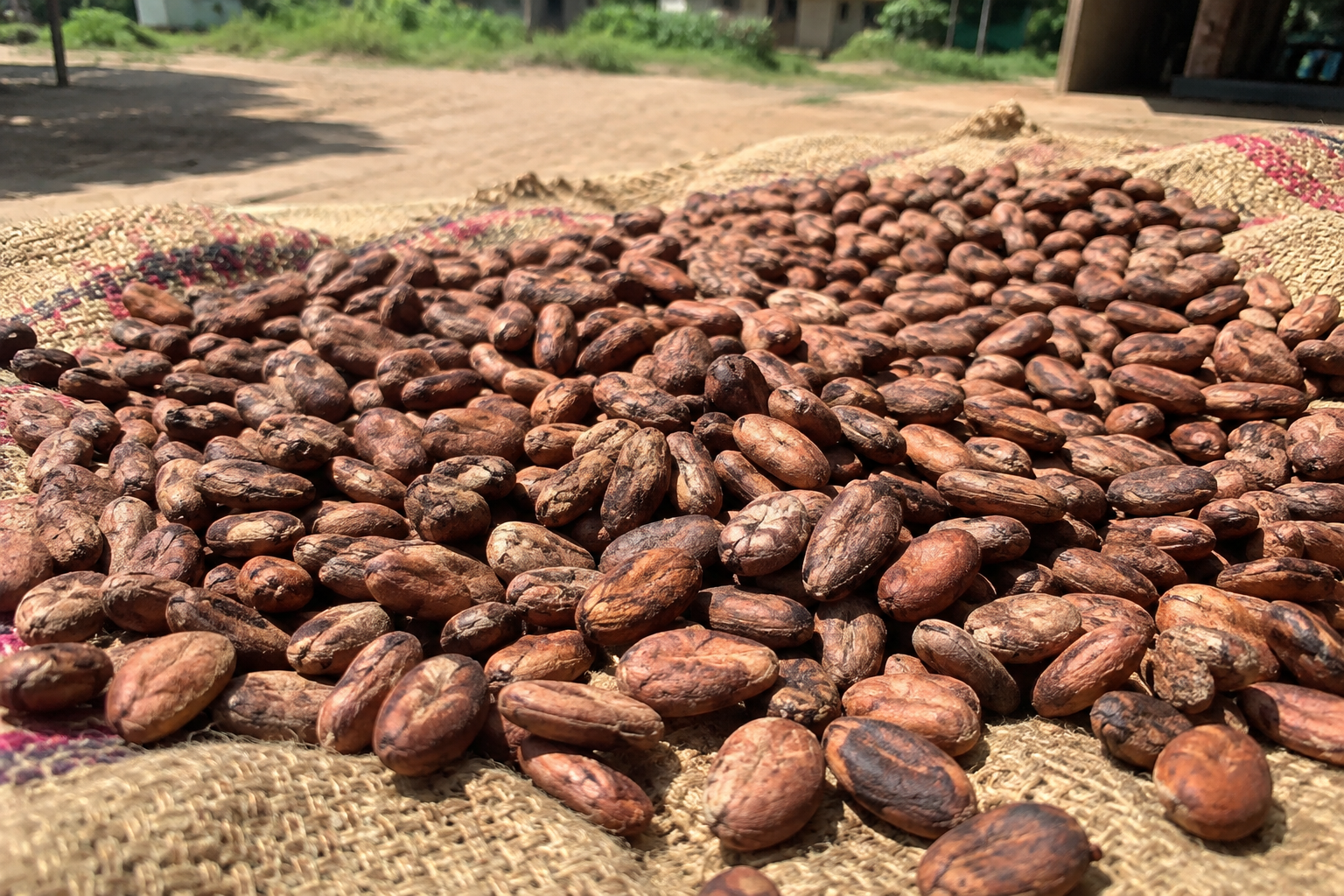
For millions of people around the world, cocoa begins and ends with chocolate. But in Ghana, one of the world’s leading cocoa-producing countries, the story starts much earlier, on farms where unpredictable weather, crop disease and competing land uses are putting pressure on the people who grow the beans.
Now, the country is preparing for another difficult season. Ghana’s cocoa regulator, the Ghana Cocoa Board (COCOBOD), has warned that production could fall by at least 16% in the 2026/27 season. The forecast raises concerns not only for farmers but also for cocoa buyers, manufacturers and businesses that depend on a reliable supply of the crop.
The situation reveals a bigger question: what happens when a country with a valuable agricultural resource struggles to protect its production and capture more of the value created from it?
A Problem That Starts on the Farm
Ghana’s projected decline is linked to several pressures. Heavy rainfall earlier in the year, the possibility of El Niño conditions, ageing farms and cocoa swollen shoot disease have all contributed to concerns about the coming harvest. Illegal gold mining, locally known as galamsey, is also encroaching on agricultural land.
These challenges are particularly significant in the Western and Western North regions, which together account for more than half of Ghana’s cocoa production.
Environmental damage adds another layer to the problem. A Forestry Commission assessment cited by Earth.Org found that illegal mining had damaged nearly 9,000 hectares of protected forest reserves by the end of 2024. Meanwhile, some farmers face a difficult choice between waiting years for cocoa trees to become productive and accepting the immediate financial returns offered by other land uses.
For businesses, these are not simply agricultural concerns. A decline in production can affect the availability of raw materials, purchasing costs, factory operations and the reliability of supply agreements. When farms struggle, the consequences can travel through the entire value chain.
Why Ghana’s Cocoa Is Worth Watching
Ghana’s position in the global cocoa market makes the situation particularly important. Together with neighbouring Côte d’Ivoire, it produces more than 60% of the world’s cocoa, giving the two countries a significant role in an industry that supplies chocolate manufacturers across the globe.
Yet producing a valuable raw material does not automatically mean capturing the greatest share of the value it generates.
Cocoa can be processed into cocoa butter, powder and liquor, which are used in chocolate, food and other products. Processing closer to the source offers producing countries a chance to participate in more stages of the supply chain rather than relying primarily on the sale of raw beans.
Ghana already has substantial cocoa-grinding capacity, estimated at around 505,000 tonnes annually. However, the African Arguments analysis reports that the country has processed far less than that capacity in recent years. This gap points to a challenge beyond building factories: processors also need dependable access to beans, financing and workable operating conditions.
In other words, the opportunity is not simply to build more processing plants. It is to make the existing value chain function more effectively.
Where Could Business Opportunities Emerge?
One area to watch is local cocoa processing. Businesses that can turn cocoa beans into ingredients or finished products could help meet demand from manufacturers while creating more opportunities for value addition within Ghana. But investors would need to assess bean availability, energy costs, financing, existing competition and access to buyers before committing capital.
A second area is farm productivity and rehabilitation. Services that help farmers manage crop disease, improve farm health and adapt to changing weather conditions could support future production. The challenge is developing solutions that farmers can afford and that deliver measurable results over time.
A third opportunity lies in traceability and sustainable sourcing. Companies selling cocoa into markets such as the European Union face requirements concerning deforestation and the origin of their supplies. Systems that help buyers and suppliers map farms, document sourcing and maintain reliable records could become increasingly important. However, compliance requires accurate data, farmer participation and practical implementation, not technology alone.
These opportunities come with risks. Lower production can make raw materials harder to secure, while environmental pressures and regulatory requirements can increase operating costs. Investors must understand the local supply chain before assuming that demand for cocoa products will translate into a profitable venture.
The Bigger Picture
Ghana’s cocoa crisis is a reminder that Africa’s business opportunities are often found by looking beyond the resource itself.
The country has the farms, the agricultural knowledge and an established place in the global cocoa trade. The challenge is protecting production while building stronger connections between farmers, processors, technology providers and international buyers.
For businesses looking at Ghana, the question is not only how to buy its cocoa. It is also how to help solve the problems that threaten its supply, improve how the crop moves through the value chain and create products that capture more value locally.
That is where the wider opportunity may lie: not in the cocoa bean alone, but in the businesses and systems needed to bring it from the farm to the global market.