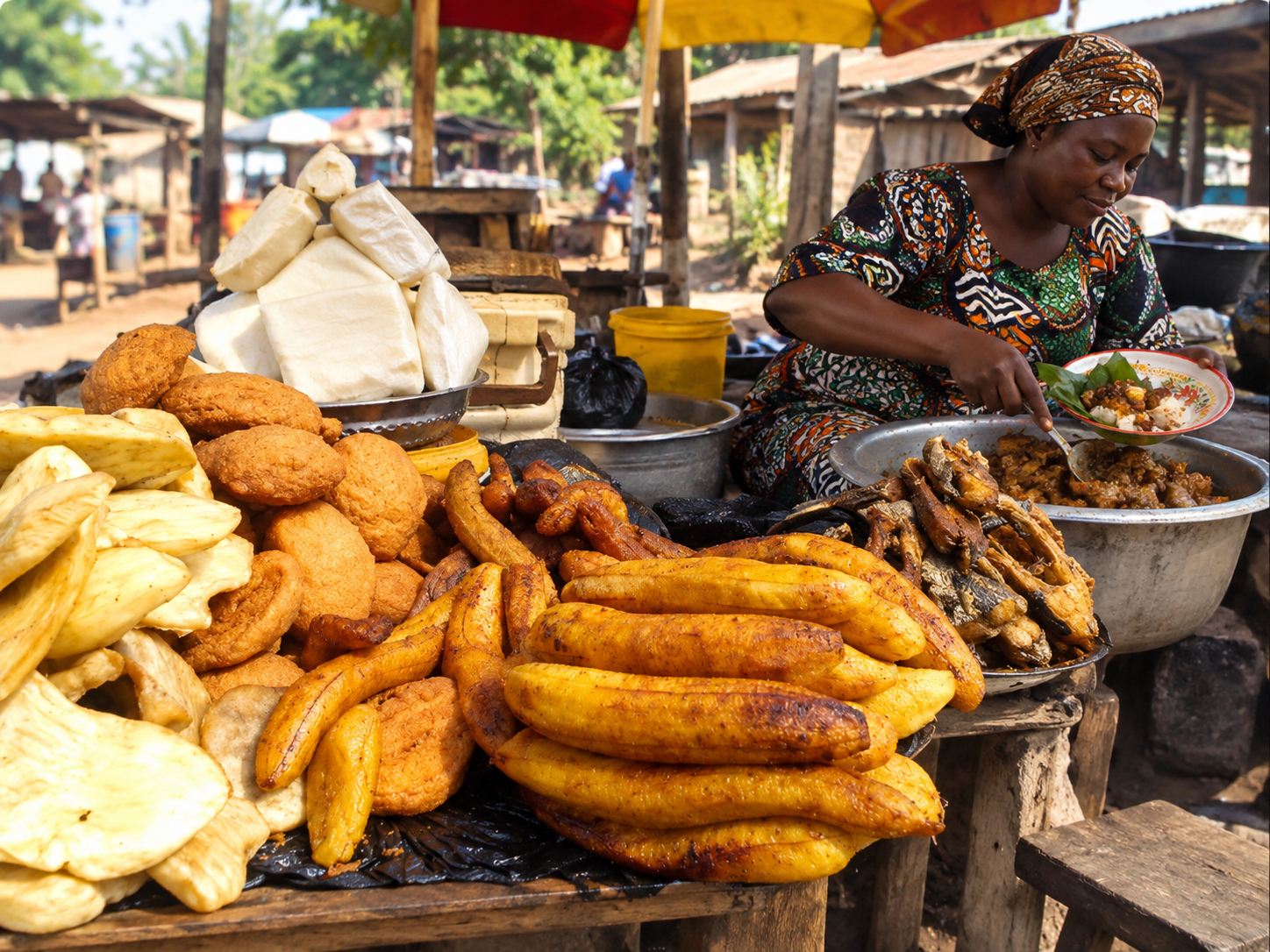
Every morning across Nigerian cities, food vendors begin preparing meals before many of their customers have left home. Someone is frying akara, another is preparing pap, another is selling rice, beans or yam. By afternoon, neighbourhood restaurants are serving workers and students. At night, restaurants, food vendors and delivery businesses are still taking orders.
These businesses may look very different, but they are part of the same food economy and it is getting bigger.
Nigeria’s foodservice industry was estimated at $11.09 billion in 2025 and is projected to reach $19.31 billion by 2030, according to a 2026 Moniepoint case study. The sector now stretches beyond traditional restaurants to include quick-service restaurants, roadside vendors, food delivery platforms and cloud kitchens.
But why does a roadside akara seller matter in a market worth billions of dollars?
Because not every food business starts with a restaurant, a storefront or a large investment.
Akara is one example.
The business can begin with a frying pan, ingredients, a table and a location where people need food. For some operators, it becomes a source of daily income and a way to support a household. Recent reporting on street-food vendors in Nigeria has documented the livelihood role these businesses play, particularly for women. A 2026 study of mobile street-food vendors in Osun State, for example, found that more than 75% of the 219 vendors surveyed were women.
That does not mean the business is easy.
The cost of starting even a modest akara operation has risen sharply. BusinessDay reported in July 2026 that setting up a basic roadside akara business could exceed ₦200,000 when equipment, ingredients and initial operating costs are included. Vendors also face rising costs for beans, cooking gas and groundnut oil.
So if small food businesses are under this much pressure, why are they still growing?
Because people still need to eat, and Nigerian consumers are changing how, when and where they buy food.
Urbanisation, longer commutes and the demand for convenience are supporting food businesses across different formats. Euromonitor says that in 2025, high inflation and weaker purchasing power pushed demand towards more affordable formats such as street stalls, kiosks and limited-service restaurants, while delivery platforms strengthened digital ordering and at-home consumption.
That means the Nigerian food market is not moving in only one direction.
At one end, there is the roadside vendor selling affordable meals to commuters. At another, there are quick-service restaurant chains with hundreds of outlets. In between are neighbourhood restaurants, bakeries, caterers, food brands operating through social media and delivery platforms, and businesses experimenting with cloud kitchens.
What has changed the way these businesses operate?
TECHNOLOGY.
For decades, much of Nigeria’s food business depended heavily on cash and handwritten records. Today, digital payments are becoming part of everyday food commerce.
Moniepoint’s 2026 study found that food and beverage businesses are its second-largest merchant category after retail, while usage of its payment terminals among quick-service restaurants increased by 2,823% following the country’s renewed shift towards cashless transactions. Online food delivery was also estimated at $1.04 billion in 2024.
The change is bigger than simply replacing cash with transfers.
Digital transactions can create records. Records can help businesses understand sales. Sales information can connect to inventory, procurement and financing.
That creates a different kind of food business: one that can increasingly use data to make decisions rather than relying entirely on memory or manual records.
And who is building around this growing market?
Both large and small businesses.
Nigeria already has established quick-service restaurant operators, while delivery platforms and cloud kitchens have created new ways for food businesses to reach customers without relying entirely on traditional dining spaces. More than 800 quick-service restaurant outlets operate across Nigeria, according to the Moniepoint study.
But the bigger opportunity may be beneath the most recognisable brands.
Thousands of smaller operators are serving specific neighbourhoods and communities. Some are formal businesses. Others are still operating informally. Some may remain small; others may eventually become restaurants, packaged-food brands or multi-location businesses.
What does this mean for someone looking at Africa from outside the continent?
It means the opportunity is not limited to opening another restaurant.
There are businesses needed around the restaurant.
There are opportunities in payments, inventory management, food delivery, packaging, cold storage, kitchen equipment, food processing, logistics, business software, financing and other services that help food businesses operate.
The market also shows how local consumer behaviour can create opportunities that may not be obvious from outside the continent.
Nigeria’s food economy is being shaped by affordability, convenience, urban lifestyles, technology and a huge network of entrepreneurs responding to everyday demand.
The woman frying akara by the roadside and the restaurant processing hundreds of digital transactions may appear to belong to different worlds. Well, they don’t. They are different parts of the same ecosystem.
And for anyone asking what opportunities exist in African markets, perhaps the better question is not simply “What can I sell in Africa?”
It is: “What are African businesses already doing, what problems are they facing, and what can be built around them?”
Nigeria’s food industry is already providing one answer. The opportunity may not always be in building the next big restaurant. Sometimes, it is in building what the businesses that feed millions of people need to survive, operate and grow.