Young Zambians are looking to China to build skills and fulfil their dreams of developing railways back home. One of them is Michael Njovu, a 26-year-old graduate student studying in Hunan Province, central China.
Njovu is studying for a master’s degree in transportation engineering at Central South University. He said he felt inspired when he learned that the Tanzania–Zambia Railway (TAZARA) revitalisation project had officially started in Zambia. For him, the project is more than just construction work; it is a chance to serve his country.
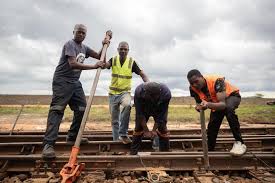
The TAZARA railway, built in the 1970s, has played a key role in Zambia’s trade by helping export goods. Njovu believes that its upgrade will not only improve transport but also create more jobs for local people. Once completed, the railway will connect southern and eastern Africa through railways, roads and ports, strengthening regional trade.
The modernised railway is expected to carry up to 2.4 million tonnes of goods each year. Transport time is also expected to reduce by almost two-thirds, making trade faster and more efficient.
The railway was originally built with interest-free loans from China and was handed over to the governments of Zambia and Tanzania in 1976. It stretches from Dar es Salaam in Tanzania to New Kapiri Mposhi in Zambia, covering a distance of about 1,860 kilometres.
More than 50,000 Chinese engineers and workers helped build the railway alongside Tanzanian and Zambian teams. Many of them were trained at institutions linked to Central South University. In the 1970s, Chinese experts worked in difficult conditions, carrying out surveys in malaria-affected areas and working long hours with limited resources.
These stories, along with China’s advanced railway technology, motivated Njovu to study in China. His university programme focuses on helping developing countries gain skills in modern railway systems. Since 2016, students from over 20 countries have joined the programme, and many graduates have returned home to support development.
Njovu plans to return to Zambia after graduating in 2026. He hopes to use his knowledge to support the country’s railway development.
“Helping to improve the railway in my home country is my dream,” he said. “I am grateful for the chance to learn advanced skills here.”