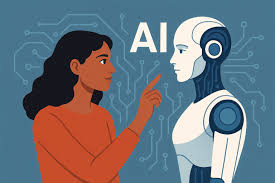
Most artificial intelligence (AI) voice assistants around the world are designed with female voices and names. While they are helpful and polite, experts warn that this design choice is reinforcing harmful gender stereotypes and encouraging abuse.
Today, AI assistants such as Siri and Alexa are used by billions of people. Many are given feminine voices and submissive personalities, while systems designed for authority or expertise are often given male voices. This sends a silent message that women are meant to serve, while men are meant to lead.
Research shows this is not just a design issue—it has real consequences. Studies reveal that a large number of users verbally abuse AI assistants, with many interactions involving sexual or insulting language. Female-voiced assistants receive significantly more harassment than male or gender-neutral ones. In some cases, companies have reported tens of thousands of sexually abusive messages directed at their chatbots in a single year.
Experts warn that this behaviour can normalise disrespect and misogyny. When users repeatedly insult or sexualise a “female” AI without consequences, it may encourage similar behaviour toward real women. Past cases, such as Microsoft’s Tay chatbot and Korea’s Luda, show how quickly AI systems can be manipulated into promoting harmful language and attitudes.
Despite these risks, most laws and regulations do not treat gender bias in AI as a serious issue. While some regions, like the European Union and Canada, have started addressing AI risks, gender stereotyping is often ignored or considered low priority. In many countries, there are no clear rules guiding how AI assistants should be designed to prevent harm.
The problem is also linked to inequality in the tech industry itself. Women make up a small percentage of AI professionals, meaning many systems are built without diverse perspectives. This lack of representation affects how technology behaves and whom it serves.
However, experts note that AI can also be used for good. In some countries, health and education chatbots have helped women and young people access vital information. The key is responsible design.
Specialists are calling for stronger laws, gender impact assessments, and accountability for companies that ignore these risks. They also stress the need for education within the tech industry to ensure AI systems promote respect, equality, and safety.
In short, AI assistants are not neutral. The choices made in their design reflect human values—and without action, harmful stereotypes risk becoming permanently built into everyday technology.