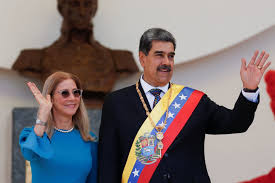
Nicolas Maduro is the long-time president of Venezuela, a country in South America that has faced deep political and economic problems for more than a decade.
Maduro was born on November 23, 1962, into a poor, working-class family. His father was a trade union leader. Before entering politics, Maduro worked as a bus driver in the capital city, Caracas. During this time, he became interested in left-wing politics and supported army officer Hugo Chávez, who led a failed coup in 1992.
Maduro strongly campaigned for Chávez’s release from prison and became one of his most loyal supporters. When Chávez won the presidency in 1998, Maduro entered politics and was elected to the National Assembly. Over the years, he rose quickly. He later became president of the National Assembly and then served as foreign minister, traveling around the world to build alliances using Venezuela’s oil wealth.
Before his death in 2013, Chávez publicly named Maduro as his chosen successor. After Chávez died, Maduro won the presidential election later that year by a very small margin and became president.
Maduro’s time in power has been marked by serious problems. Venezuela’s economy collapsed, leading to hyperinflation, food and medicine shortages, and widespread poverty. Millions of Venezuelans left the country to look for better lives abroad. His government has been accused of rigging elections, silencing opposition leaders, and using force against protesters, especially during major demonstrations in 2014 and 2017.
The United States and other countries imposed strong sanctions on Maduro’s government. In 2020, U.S. authorities charged him with corruption and drug-related crimes, which Maduro denied, calling them political attacks.
In January 2025, Maduro was sworn in for a third term after a 2024 election that the opposition and many international observers said was unfair. Protests followed, and thousands of demonstrators were arrested.
Recently, a United Nations fact-finding mission reported that Venezuela’s security forces committed serious human rights violations over many years, including crimes against humanity against political opponents. At the same time, the global spotlight turned to Venezuela again after U.S. President Donald Trump claimed that Maduro had been captured by U.S. forces, a statement that caused strong reactions around the world.
Despite these events, Maduro’s close allies still control key institutions in Venezuela, leaving the country’s future uncertain as political tension and international pressure continue.