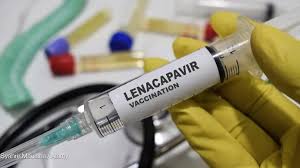
The Uganda AIDS Commission (UAC) has sounded the alarm over dangerously low funding for Lenacapavir, a revolutionary long-acting injectable drug that could transform HIV prevention efforts in the country.
According to the Commission, only 19,000 doses have been allocated for 2025 — enough to protect just a fraction of the population, despite Uganda recording 37,000 new HIV infections in 2024.
“We have the tools, but we are not implementing them at the scale required to make a real difference,” said Dr. Joshua Byamukama, a senior official at UAC. “To prevent one HIV infection effectively with Lenacapavir, at least 40 people need to be on the drug. With our current funding, the national impact will be negligible.”
Lenacapavir, developed by Gilead Sciences, is one of the world’s newest HIV prevention tools. Unlike daily oral PrEP (Pre-Exposure Prophylaxis), Lenacapavir is administered once every six months, offering a more discreet and convenient option for those at risk of HIV infection.
Health experts say the drug could revolutionize prevention if widely deployed, particularly among young women, who account for the majority of new infections in Uganda.
However, with only 19,000 doses funded, the UAC warns that the program may fail to make a measurable dent in infection rates.
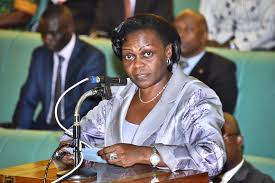
During a recent parliamentary session, Committee Chairperson Sarah Kayagi raised questions about how Lenacapavir fits into Uganda’s existing HIV prevention strategy.
“We need to understand what this new drug is, how it’s administered, and whether it will replace PrEP and PEP (Post-Exposure Prophylaxis), or whether the three will run concurrently,” she said. “There’s already misinformation circulating that the injection is a cure.”
Dr. Byamukama clarified that Lenacapavir is not a cure or vaccine, but a preventive drug that stops HIV from entering healthy cells.
“A vaccine trains your immune system permanently. This drug doesn’t — once you stop taking it, protection fades. It must be given every six months,” he explained.
Uganda remains one of the countries hardest hit by HIV in East Africa. The UAC’s 2024 data shows that women accounted for 21,000 of the 37,000 new infections, men for 11,000, and children for 4,700.
The Commission attributes this disparity to biological vulnerability, gender inequality, and socioeconomic factors that limit women’s access to preventive tools like PrEP and condoms.
UAC Director General Dr. Nelson Musoba lamented Uganda’s continued dependence on foreign aid, warning that despite major progress over the past four decades, the country has yet to achieve epidemic control.
“Our gains are fragile,” Dr. Musoba said. “Donor dependence remains high amid tightening global funding. Without increased domestic financing, we risk losing the ground we’ve fought hard to gain.”
Currently, the Uganda Consolidated Fund contributes only 13% (UGX 315 billion) of the national HIV budget. The remaining UGX 1.295 trillion (about 87%) comes from international partners such as PEPFAR, The Global Fund, and UNAIDS.
Of this funding, 60% goes to treatment, while only 13% supports prevention — a distribution critics say undermines the country’s ability to “close the tap” on new infections.
Despite improved access to antiretroviral therapy (ART), Uganda still recorded 20,000 AIDS-related deaths in 2024 — including 8,700 men, 8,300 women, and 3,100 children.
Experts say these deaths are largely preventable with consistent treatment, viral load monitoring, and early diagnosis. Yet stigma, poor adherence, and rural access barriers continue to undermine progress.
“In medicine, we never say never,” warned Dr. Byamukama. “Even people on treatment can transmit HIV if they don’t achieve viral suppression. It’s dangerous to assume zero risk.”
Ruth Ssenyonyi, Board Chairperson of UAC, pointed out that HIV’s persistence is partly rooted in cultural and social taboos.
“HIV is linked to sexual pleasure — something people rarely talk about openly,” she said. “It happens in private spaces, beyond anyone’s control, whether you are a teacher, politician, or president. That silence is one of the biggest barriers we face.”
The UAC is now urging government and development partners to scale up funding for Lenacapavir and other innovative prevention tools. The goal is to raise domestic HIV funding to 40% by 2030, ensuring sustainability and reducing dependence on donors.
“This is not just about one drug,” Dr. Musoba said. “It’s about whether Uganda can take ownership of its HIV response and protect future generations.”