KAMPALA – Uganda’s First Lady and Minister of Education and Sports, Janet Museveni, has called for deeper collaboration between Uganda and Ireland, with a focus on expanding practical skills training to address the country’s growing infrastructure and employment needs.
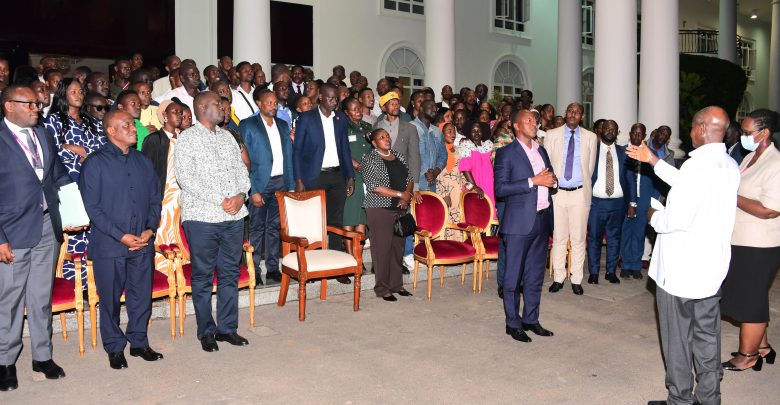
While hosting Ireland’s Ambassador to Uganda, Margaret (Mags) Gaynor, at State House Nakasero on Tuesday, Mrs Museveni emphasised the importance of equipping young Ugandans with hands-on technical skills, particularly in critical sectors such as road and dam construction.
The meeting, held during St. Patrick’s Day, reaffirmed the strong and longstanding relationship between the two countries. This partnership has been strengthened through Irish Aid programmes that have significantly supported education and community development, especially in the Karamoja sub-region.
Mrs Museveni expressed Uganda’s appreciation for Ireland’s continued support, describing the relationship as “warm and dependable,” and acknowledged the impact of ongoing collaborations in primary and secondary education, bursaries, and vocational training.
“I want to welcome you to Uganda and assure you that you are among friends,” she said. “We value our partnership and the consistent support extended to our education sector, especially in Karamoja.”
She stressed the need to expand skills training into high-demand infrastructure fields, noting that despite the presence of technical institutions across the country, there remains a shortage of qualified, hands-on instructors.
To address this gap, the First Lady requested Ireland’s support in providing master trainers who can build the capacity of local instructors through practical, on-the-job training.
“We have many technical schools, but we lack hands-on trainers. We would like to explore bringing skilled trainers to Uganda to strengthen our instructors locally,” she said, adding that this would help reduce reliance on foreign expertise and empower local youth.
Mrs Museveni also highlighted the success of the “Teachers Making a Difference” programme, supported by Irish Aid, praising its role in improving teaching standards and broadening educators’ perspectives through exposure visits to Ireland.
“We are building a global village for our children. Wherever we can partner to improve what we are doing, it is for the good of our nations,” she noted.
In response, Ambassador Gaynor reaffirmed Ireland’s commitment to supporting Uganda’s development priorities, particularly in enhancing employability through practical skills training.
“We want to train people for jobs, not just certificates,” she said, adding that Ireland is open to exploring innovative partnerships with both government and the private sector to scale up skills development.
Over the years, Irish-funded initiatives have included the School Feeding Programme in Karamoja, the Karamoja Primary Education Expansion Project, and the Skilling Uganda Project. Current support also extends to vocational institutions in Nakapiripirit, including St Daniel Comboni and Kotido.
The Ambassador further highlighted ongoing collaboration with development partners in advancing technical and vocational education and training (TVET), as well as programmes that connect trainees to employment and entrepreneurship opportunities.
Also speaking at the meeting, State Minister for Primary Education Joyce Kaducu underscored the importance of strengthening trainer capacity to improve skills transfer, while Permanent Secretary Kedrace Turyagyenda emphasised the need for qualified instructors to sustain quality vocational education.
Both Uganda and Ireland reaffirmed their commitment to continued collaboration, with a shared vision of empowering young people through relevant education, practical skills, and sustainable development opportunities.