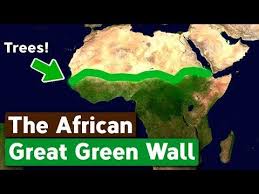
An ambitious environmental project stretching across Africa is working to stop the spread of the Sahara Desert, restore degraded land, and improve the lives of millions of people. Known as the Great Green Wall, the initiative brings together 11 African countries to plant trees and restore ecosystems across the Sahel region.
What Is the Great Green Wall?
The Great Green Wall is a large-scale land restoration project that runs from Senegal in West Africa to Djibouti in the East, covering nearly 8,000 kilometers in length and about 15 kilometers in width.
Launched in 2007 by the African Union in partnership with the United Nations Convention to Combat Desertification (UNCCD), the project aims to fight desertification — the process where fertile land becomes desert due to drought, climate change, and human activity.
The countries involved include:
Senegal
Mauritania
Mali
Burkina Faso
Niger
Nigeria
Chad
Sudan
Eritrea
Ethiopia
Djibouti
Although it is often described as a “wall of trees,” it is not a single continuous line of forest. Instead, it is a network of restoration projects adapted to each country’s conditions. These include planting native trees, restoring soil fertility, improving water management, and promoting sustainable agriculture.
Why It Is Important
The Sahel region faces frequent droughts, rising temperatures, and unpredictable rainfall. These conditions reduce crop yields, weaken livestock farming, and increase food insecurity.
About 250 million people live in areas affected by land degradation in this region. Many depend on farming and herding for survival. When land becomes infertile, incomes drop and hunger rises.
The Great Green Wall aims to:
Restore 100 million hectares of degraded land by 2030
Capture 250 million tons of carbon
Create up to 10 million green jobs
By restoring land, the project seeks to improve food production, strengthen local economies, and reduce migration caused by environmental stress.
Progress So Far
Reports indicate that between 20 and 30 million hectares may already have been restored, though exact figures vary depending on measurement methods.
Senegal has reported planting over 12 million trees. Ethiopia has also carried out large-scale restoration efforts across millions of hectares.
In 2021, international donors pledged around €19 billion to support the project. However, monitoring reports show that not all pledged funds have yet been fully delivered.
To improve transparency, the UNCCD launched a monitoring platform in 2024 to track funding, progress, and results more accurately.
Challenges on the Ground
The project faces several obstacles:
Political instability and armed conflict in parts of the Sahel
Extreme weather conditions
Limited infrastructure
Differences in national capacity and coordination
Experts also stress that planting trees is only the first step. Long-term maintenance, community involvement, and sustainable land management are essential to ensure lasting results.
More Than Just Trees
The Great Green Wall is not only about stopping the desert. It is about rebuilding ecosystems, supporting farmers, and improving resilience to climate change.
If successful, it could become one of the largest environmental restoration efforts in history — transforming vulnerable landscapes and offering hope to millions of people across Africa.
The 2030 deadline remains the official target, and while progress continues, the coming years will determine whether this green vision can fully take root across the Sahel.