Ivory Coast’s two main opposition parties have called for daily nationwide protests ahead of the country’s October 25 presidential election, intensifying political tensions just two weeks before voting day.
The move comes after authorities barred top opposition figures, including former president Laurent Gbagbo and Tidjane Thiam, from running in the election — a decision that has sparked anger among their supporters and drawn international concern.
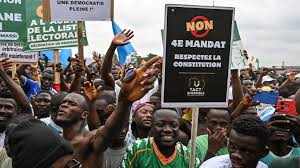
On Saturday, protesters defied a government ban and gathered in Abidjan, the country’s commercial capital. Security forces responded with tear gas and mass arrests, dispersing crowds demanding free and fair elections.
According to Interior Minister Vagondo Diomande, 237 people were arrested during the demonstrations. Opposition leaders say dozens were injured, accusing the government of using “brutal force” to silence dissent.
“Demonstrations for democracy, justice, and peace will continue every day across the country until our calls for political dialogue are heard,”
said the Common Front, a coalition uniting the two leading opposition parties, in a joint statement on Sunday.
President Alassane Ouattara, 83, who has been in power since 2011, is seeking a controversial fourth term under his Rally of Houphouëtists for Democracy and Peace (RHDP) party.
Critics accuse him of trying to extend his rule and sidelining political rivals. The government has banned opposition rallies and restricted political gatherings, citing security concerns.
Ouattara’s campaign officially began on October 10 with a rally in the western city of Daloa, where he promised stability and continued economic growth if re-elected.
With Gbagbo and Thiam barred, the upcoming race will feature:
• Jean-Louis Billon, former trade minister
• Ahoua Don Mello, former public works minister
• Simone Ehivet Gbagbo, ex-first lady and widow of Laurent Gbagbo
• Henriette Lagou, who also contested in the 2015 election
Political analysts say the exclusion of major opposition leaders has left the election unbalanced, raising fears of low voter turnout and possible unrest.
Ivory Coast, one of West Africa’s largest economies, has a fragile political history. The disputed 2010 presidential election led to a civil war that left more than 3,000 people dead after Gbagbo refused to concede defeat to Ouattara.
Though the country has enjoyed relative peace in recent years, many Ivorians worry that political exclusion and heavy-handed policing could reignite old divisions.
“If the government continues to suppress protests, the risk of violent clashes will increase,” warned Dr. Amadou Coulibaly, a political analyst at the University of Cocody. “Ivory Coast cannot afford another post-election crisis.”
The African Union (AU) and ECOWAS have both urged calm and called for inclusive dialogue between the government and opposition.
Several Western embassies, including those of France and the United States, have advised their citizens to avoid large gatherings amid fears of escalating violence.
The opposition says protests will continue daily until the electoral commission reconsiders the exclusion of Gbagbo and Thiam and agrees to reforms ensuring fair participation for all candidates.
Meanwhile, the government has vowed to uphold law and order, insisting that the election will proceed as planned on October 25, 2025.
For many Ivorians, the coming days will determine whether the nation moves toward peace — or risks sliding back into turmoil.