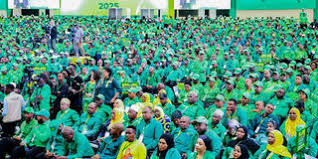
Tanzania—the East African nation once known as an “Island of Peace”—has been rocked by major youth protests following the recent election, highlighting both political unrest and a generation unwilling to accept what they view as a sham vote.
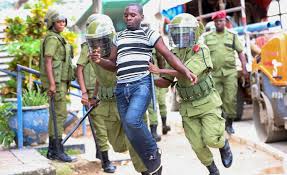
On October 29, 2025, protests erupted when young people, often referred to as Gen Z, took to the streets in cities like Dar es Salaam and Mwanza, demanding credible elections and justice after the ruling party, Chama Cha Mapinduzi (CCM), appeared to rig the process.
The catalyst was the exclusion of prominent opposition figures: Tundu Lissu, the main challenger, remains jailed, while another potential rival was barred from running. With limited competition, President Samia Suluhu Hassan was effectively unopposed.
In Mwanza, protesters reportedly intercepted a truck allegedly carrying ballots disguised as sacks of maize. In Dar es Salaam, youth vandalised properties linked to ruling-party figures, and the military warned that protests must stop.
Political analysts say this wave of unrest signals a wider crisis of democracy across Africa—not because only Tanzania is affected, but because similar patterns are emerging through the continent: opposition exclusion, manipulated institutions, and youth uprisings.
“This generation is totally different … they are saying this is ridiculous,” wrote commentator Nkwazi Mhango. “If we can’t fix the institutions, nothing will change.”
Observers also highlight an important geopolitical shift: global powers such as China, Russia and the UAE are increasingly engaging with African states without insisting on democratic reforms. This reduces external pressure on governments to allow free elections.
Meanwhile, the U.S., under a more transactional diplomacy approach, has cut back on support for pro-democracy groups—further eroding checks on authoritarian behaviour.
Tanzania’s youthful population—making up a large portion of the country—has for years faced unemployment and stagnant opportunities.
The recent election triggered a tipping point. Many now feel they have nothing to lose.
The consequences could be serious. As the article puts it: “There cannot be perpetual peace amid prevalent corruption and injustices.”
For Tanzania, the moment raises urgent questions: Will the government respond with reform or repression? Can institutions be strengthened to deliver real choice, or will the youth become increasingly alienated—and possibly volatile?
In a country once celebrated for its stability, the “Island of Peace” now faces its greatest test: whether it can rebuild a credible democracy or risk long-term unrest.