Khartoum, the capital of Sudan, is beginning the long and challenging process of rebuilding after nearly three years of war. The war, which began in April 2023, saw intense fighting between the army and the Rapid Support Forces (RSF), leaving much of the city in ruins. The Sudanese government, operating from Port Sudan for much of this period, is now working to return to the capital.
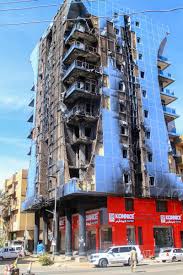
Efforts to restore the city’s infrastructure have started in earnest, although much of Khartoum remains a scene of devastation. Key sites like the Sudanese Finance Ministry, which still sits in a courtyard overrun with weeds and abandoned vehicles, highlight the massive scale of the destruction. The area remains dangerous, with unexploded mines yet to be cleared, marked as “red” zones by the United Nations Mine Action Service (UNMAS).
Despite the continuing conflict in regions like Kordofan, Sudan’s Prime Minister Kamil Idris has confirmed plans for the government to gradually return to Khartoum. This comes after the army regained control of the city from the RSF in March 2025. Since then, rebuilding efforts have focused on clearing main roads and restoring essential government buildings. Several ministries have begun renovations, though many remain abandoned and in disrepair, with bullet-scarred walls and shattered windows.
The country’s central bank building stands as a symbol of the destruction—its once-imposing structure now a burnt-out shell. Yet, there are glimmers of hope. The bank announced this week that it would resume operations in Khartoum State, marking a small step toward normalcy.
While the government offices and some parts of the city show signs of recovery, daily life for residents is still challenging. Many of Khartoum’s nine million residents fled the city during the conflict, with over a million returning since the army’s recapture of the city. Business owners, like tea seller Halima Ishaq, are struggling to make a living. “Business is not good. The neighborhood is still empty,” she said, earning a fraction of her pre-war income.
Khartoum’s international airport has been partially renovated but remains closed after an RSF drone strike last September, just weeks before its planned reopening. Nonetheless, there is optimism in the air. The Grand Hotel, once frequented by international dignitaries, hopes to reopen by mid-February. The building, a symbol of Khartoum’s grandeur, survived significant damage, and renovations are underway to restore it to its former glory.
In the meantime, other cultural landmarks like the National Theatre and Al-Merreikh Stadium, vital to Sudan’s cultural identity, are slowly being restored. The National Theatre, which once hosted iconic artists such as Umm Kulthum, is undergoing repairs, although much of its sound and lighting equipment was destroyed during the war.
Despite the visible damage, there are signs of resilience. Volunteers are working tirelessly to restore parts of the city’s infrastructure, and government visits continue, bringing promises of aid and financial support. However, the urgent priorities for the people of Khartoum are basic services like water and electricity. At night, the streets remain dark, and many residents, like medical intern Taghreed Awad al-Reem Saeed, feel unsafe, with men returning to work alone while families stay elsewhere.
Rebuilding Khartoum will be a long and costly process. The UN estimates that restoring the city’s infrastructure alone will cost around $350 million. Yet, for many in Khartoum, the promise of recovery brings hope that life will eventually return to normal—or even better than before.