Uganda’s move to acquire a 20.15 percent stake in the Kenya Pipeline Company marks a significant development in regional energy politics, transforming what appeared to be a routine privatization into a strategic shift in East Africa’s energy landscape.
Publicly, the Kenyan government framed the company’s Initial Public Offering (IPO) as a step toward broadening ownership and empowering local investors. Yet behind the scenes, analysts say a more complex geopolitical strategy unfolded. Through the Uganda National Oil Company, Kampala secured a major shareholding that gives it a direct role in the management and governance of one of Kenya’s most critical energy infrastructures.
For Uganda, led by President Yoweri Museveni, the acquisition represents more than a financial investment. It positions the country as a participant in the fuel supply chain that it heavily depends on, shifting its role from that of a dependent customer to an influential stakeholder. Meanwhile, Kenya’s government under President William Ruto presented the deal as a move that would attract capital and support regional integration.
A Strategic Entry into Key Infrastructure
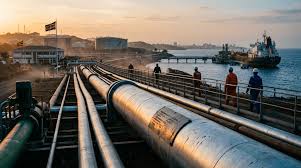
Founded in 1973, the Kenya Pipeline Company plays a central role in the country’s economy. The pipeline network stretches more than 1,300 kilometers, transporting petroleum products from the port city of Mombasa across Kenya and into neighboring countries within the East African Community.
When the Kenyan government launched the privatization process, the goal was to raise funds and improve operational efficiency. However, the IPO initially struggled to attract sufficient subscriptions from retail and institutional investors.
At that critical moment, Uganda stepped in with a large investment that helped push the offering to 105.7 percent of the targeted amount. By purchasing a significant block of shares, Uganda became the largest regional institutional shareholder.
As part of the agreement, Uganda reportedly secured two board seats and influence over key decisions, including pipeline tariffs, dividend policies, and changes to the company’s capital structure. This level of participation provides Kampala with institutional leverage over a system through which roughly 65 percent of its petroleum imports transit.
Energy Security and Regional Politics
Uganda’s decision reflects long-standing concerns about energy security. As a landlocked country, approximately 95 percent of its petroleum imports pass through Kenya’s infrastructure, leaving it vulnerable to supply disruptions, logistical bottlenecks, or political tensions.
By becoming a shareholder, Uganda reduces that vulnerability. Instead of relying solely on diplomatic negotiations, it now has a legal and financial stake in the company that controls the infrastructure. Analysts view this as a strategic hedge against potential disputes between the two neighbors.
Although Uganda has explored alternative routes, including the Tanzanian corridor, Kenya’s pipeline network remains the most established and efficient system for fuel transport in the region.
Debate Inside Kenya
The development has sparked debate within Kenya. Critics argue that while the IPO was promoted as an opportunity for ordinary citizens to invest in national infrastructure, large institutional investors ultimately dominated the share purchases.
Some analysts worry that allowing a foreign state-owned entity significant influence in a strategic asset could complicate future decision-making. Conflicts could arise if the interests of Ugandan consumers—who prefer lower tariffs—clash with those of Kenyan investors seeking higher returns.
A New Phase of Regional Integration
The acquisition highlights how infrastructure projects increasingly serve as instruments of diplomacy and regional strategy within East Africa. As integration within the East African Community deepens, assets such as pipelines, ports, and railways are becoming shared economic and political spaces.
For Uganda, the investment secures long-term influence over a crucial supply route. For Kenya, the challenge will be managing a strategic asset that now includes regional stakeholders while safeguarding national interests.
The outcome signals a broader shift in East Africa: critical infrastructure is no longer purely national. Instead, it is becoming part of a shared but contested regional framework, where economic investment and geopolitical strategy increasingly overlap.