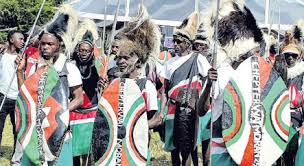
In the vast northwestern frontier of Kenya lies a land of shimmering heat, endless horizons, and fierce beauty. This is Turkana — home of the “People of the Grey Bull,” guardians of the Jade Sea, known to the world as the Turkana.
The story of the Turkana begins centuries ago. Oral traditions trace their origins to the Ateker cluster of Eastern Nilotic-speaking communities that migrated southward from regions around present-day Ethiopia and South Sudan between the 15th and 18th centuries. Guided by cattle, resilience, and the search for pasture and water, they settled around the shores of Lake Turkana — the world’s largest permanent desert lake.
This lake, with its jade-green waters, became more than geography. It became identity. It shaped their spirituality, economy, social organization, and survival strategies in one of the harshest climates in East Africa.
The Birth of a Distinct Culture
Turkana culture grew from adaptation.
In a land where rainfall is rare and survival uncertain, pastoralism became central. Cattle, camels, goats, and sheep were not merely livestock; they were wealth, dowry, food security, and spiritual symbols. Age-set systems organized men into warrior (ngimurok), elders, and leaders, ensuring order and defense of grazing lands.
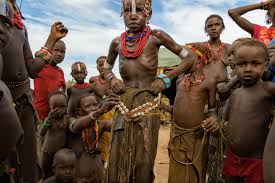
Beadwork flourished as both art and communication. The colors worn by Turkana women signal marital status, age, and social identity. Songs and oral poetry preserved history, celebrated bravery, and passed down ancestral wisdom long before written records arrived.
Unlike many centralized societies, traditional Turkana leadership was decentralized. Authority rested with respected elders rather than kings — a system that encouraged communal decision-making and shared responsibility.
The Turkana in Modern Kenya: Population and Presence
Today, the Turkana people number approximately 1.0–1.1 million, representing about 2% of Kenya’s total population. They are the dominant community in Turkana County, one of Kenya’s 47 counties.
Though historically marginalized due to geographic remoteness and harsh climate, the Turkana have increasingly become visible in Kenya’s national narrative — politically, economically, and culturally.
For decades after independence, northern Kenya remained politically underrepresented. But constitutional reforms in 2010 changed the story.
The new devolved government system empowered counties, giving Turkana leaders direct control over local resources and development priorities. Leaders such as John Munyes have served in key national cabinet positions, symbolizing growing inclusion at the highest levels of government.
Turkana legislators and governors now play critical roles in:
Resource governance debates
Security policy in northern Kenya
Cross-border peace initiatives with Ethiopia, South Sudan, and Uganda
Advocacy for marginalized and pastoralist communities
Their political influence is increasingly tied to natural resource discoveries in the region.
Economic Contribution: From Pastoralism to Petroleum
For generations, the Turkana economy revolved around livestock trade. Cattle markets connected northern Kenya to Uganda, Ethiopia, and central Kenya.
But the 21st century brought a turning point.
Oil discoveries in Turkana County — particularly around Lokichar — placed the region at the center of Kenya’s emerging petroleum industry. This development transformed Turkana from a perceived economic periphery to a potential energy frontier.
Beyond oil, the region contributes through:
Livestock production and trade
Fishing industry along Lake Turkana
Renewable energy projects, including wind and solar in northern Kenya
Cross-border trade networks
Cultural tourism linked to Lake Turkana and archaeological heritage
Notably, Lake Turkana’s basin is globally significant for paleoanthropology, with discoveries that illuminate early human history.
For years, national narratives often portrayed Turkana only through drought, famine, and insecurity. What was missing were the deeper truths:
The Turkana are not merely survivors of climate hardship — they are masters of adaptation.
Their indigenous knowledge of dryland management is invaluable in an era of climate change.
Their decentralized leadership systems offer lessons in communal governance.
Their resilience has sustained cross-border peace networks long before modern state boundaries existed.
Today, education levels are rising, infrastructure is improving, and young Turkana professionals are entering universities, entrepreneurship, civil service, and global institutions.
A Culture Rooted in Resilience
The Turkana story is not one of isolation, but of endurance and transformation.
From ancient migrations to modern oil fields, from cattle camps to parliamentary chambers, the Turkana people remain deeply connected to their land and traditions while actively shaping Kenya’s future.
Their beads still shine under the desert sun.
Their cattle still cross dusty plains.
Their voices now echo in national policy halls.
And as Kenya continues to evolve, the sons and daughters of the Jade Sea stand not at the margins — but at the center of a story still being written.