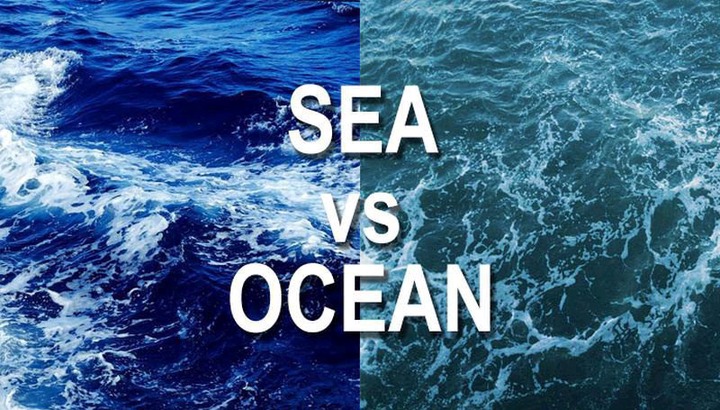
Earth is often called the “blue planet,” and for good reason. About 71% of its surface is covered by saltwater, mainly in two vast forms: oceans and seas. While these bodies of water may appear similar, they differ in several important ways. The two main distinctions lie in their size and depth and in their salinity and ecosystems.
1. Size and Depth
The most noticeable difference between oceans and seas is their dimension and depth.
Oceans are the largest and deepest bodies of water on Earth. The five major oceans—the Pacific, Atlantic, Indian, Southern, and Arctic—are all interconnected, forming one massive global ocean system. On average, oceans reach depths of about 12,080 feet (3,682 meters), making them far deeper than seas.
In contrast, seas are smaller and generally shallower. They are often partially enclosed by land and are usually located where oceans meet continents. Well-known examples include the Mediterranean Sea, Caribbean Sea, and Red Sea. The depth of seas can vary widely but typically ranges from a few hundred to a few thousand feet, making them significantly less deep than oceans.
2. Salinity and Marine Ecosystems
Another important difference lies in salinity (salt content) and the types of ecosystems these waters support.
Oceans generally have more stable salinity levels. Because of their enormous size and continuous water circulation, factors like evaporation, rainfall, and freshwater input from rivers have a relatively balanced effect on ocean salt concentration.
Seas, however, often experience greater variation in salinity. Since many seas are surrounded by land and receive freshwater from nearby rivers, their salt levels can change more noticeably.
These environmental differences can also influence marine life. Seas frequently host diverse ecosystems, partly because the mixing of freshwater and saltwater brings nutrients that support a wide range of organisms. As a result, many seas become rich habitats for marine species.
Conclusion
Although oceans and seas are both massive saltwater environments, they are not the same. Oceans are larger, deeper, and maintain more consistent salinity, while seas are smaller, shallower, and often influenced by nearby land and freshwater sources. These distinctions shape the unique environments found within each, contributing to the incredible diversity of life in Earth’s waters.