President William Ruto has unveiled an ambitious and far-reaching plan aimed at transforming Kenya into a first-world economy, anchored on a Ksh.5 trillion development blueprint focused on infrastructure, food security, energy expansion, and industrialisation.
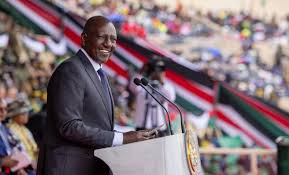
Speaking during the 62nd Jamhuri Day celebrations held at Nyayo National Stadium in Nairobi, the President outlined a clear roadmap for achieving economic freedom, drawing inspiration from Kenya’s founding fathers who fought colonial rule and secured political independence.
He challenged Kenyans to emulate that generation’s courage and determination by now striving for economic independence that guarantees dignity, opportunity, and inclusion for all citizens.
At the heart of the plan is the proposed National Infrastructure Fund, which President Ruto described as a critical instrument for mobilising domestic and private capital to finance large-scale national projects.
The fund will support the expansion and modernisation of infrastructure, irrigation to enhance food security, and increased energy generation to drive value addition, agro-processing, and industrial growth.
Complementing this initiative is the planned establishment of a Sovereign Wealth Fund, designed to safeguard the interests of future generations. According to the President, the fund will be anchored on three pillars: saving for future generations, stabilising the economy against global shocks, and making strategic national investments.
President Ruto announced that the Cabinet is set to meet to approve both the architecture of the National Infrastructure Fund and the Sovereign Wealth Fund Policy. He explained that these funds will be capitalised through natural resource royalties, dividends from public investments, and a portion of proceeds from privatisation.
This approach, he noted, will reduce overreliance on borrowing and taxation while unlocking large-scale private sector investment.
The President emphasised that the funds will operationalise Article 201(c) of the Constitution, which requires equitable sharing of the burdens and benefits of public resources between present and future generations, ensuring inter-generational equity.
In reviewing progress made so far, President Ruto highlighted reforms in key sectors including agriculture, health, education, water, energy, infrastructure, and technology, all aimed at achieving sustainable economic growth. He singled out the recently enacted Government-Owned Enterprises Bill as one of the most transformative reforms since independence.
“The new law revolutionises the management and governance of State-owned enterprises by professionalising boards through merit-based appointments and tying leadership to measurable performance,” he said.
He added that the law decisively ends cronyism and patronage by disqualifying individuals who have held political or public office in the past five years from appointments to State corporation leadership.
Beyond economic reforms, the President made a passionate appeal for patriotism, integrity, and national unity, warning that corruption, tribalism, and division threaten Kenya’s social fabric.
He described corruption not only as theft of public funds, but also as the theft of hope, opportunity, and national destiny.
“Patriotism is putting the nation’s interest above tribe, clan, or self. Integrity, in its highest form, is patriotism in action,” he said, while urging Kenyans to rebuild strong values rooted in honesty, responsibility, and love for country.
President Ruto identified three critical enablers of economic freedom: strategic human capital development, peace and security, and a strong sense of national interest and integrity.
With these foundations in place, he said, Kenya’s vision of becoming a prosperous, sovereign, and inclusive nation is not only achievable but inevitable.
Reflecting on history, the President noted that while the founding generation defeated colonial domination, the responsibility of achieving economic freedom now rests with the current generation and his administration in particular.
“A freedom where effort is rewarded, opportunity is shared, dignity is guaranteed, and no Kenyan is left behind,” he said.
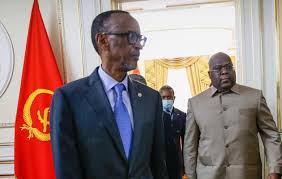
The celebrations were attended by several regional and international leaders, including the President of Ghana, who was the chief guest.
The Ghanaian leader underscored the importance of value addition to African exports and called for increased intra-African trade, noting the continent’s vast untapped market. He also commended Kenya’s role in supporting peace and stability efforts in Haiti.
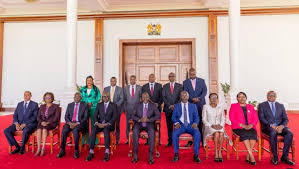
Several leaders, including Deputy President Prof. Kithure Kindiki, Burundi Vice-President Prosper Bazombanza, Uganda Prime Minister Robinah Nabbanja, and Nairobi Governor Johnson Sakaja, also addressed the gathering, reaffirming the significance of unity, development, and shared prosperity as Kenya charts its path toward a first-world economic future.