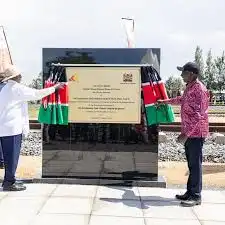
In a strong show of regional cooperation, Uganda’s President Yoweri Museveni joined Kenya’s President William Ruto in Kisumu to launch the long-anticipated Naivasha–Kisumu–Malaba Standard Gauge Railway (SGR), a project set to reshape trade and transport across East Africa.
The launch, held on March 21, 2026, marks a major milestone in efforts to strengthen economic integration within the region. President Museveni, attending at Ruto’s invitation, described the railway as a strategic investment that will significantly reduce transport costs, improve efficiency, and enhance the movement of goods between countries.
The new railway phase will extend Kenya’s existing SGR line from Naivasha through Kisumu to Malaba at the Uganda border, closing a critical gap in the Northern Corridor. This corridor serves as a vital trade route linking the port of Mombasa to landlocked countries in East Africa.
For years, cargo arriving in Naivasha has relied on road transport to reach Uganda and beyond, increasing both time and cost. The extension to Malaba is expected to change this by enabling seamless rail transport directly to the border, cutting delays and boosting trade efficiency.
Spanning over 260 kilometres, the multi-billion-dollar project is scheduled to begin construction in March 2026 after facing prolonged delays due to financing challenges. Once completed, it is expected to unlock economic potential in western Kenya while strengthening regional supply chains.
The project also aligns closely with Uganda’s own railway ambitions. Plans are underway to connect Kampala to Malaba, which will link directly to Kenya’s SGR network and provide Uganda with a more efficient route to the Indian Ocean port of Mombasa.
Leaders from both nations view the railway as more than just infrastructure—it is a symbol of renewed commitment to regional unity and economic growth under the East African Community framework.
By improving connectivity and lowering logistics costs, the SGR is expected to support industrial development and expand trade opportunities for decades to come.
As construction begins, the project stands as a powerful example of how collaboration between nations can drive progress, bringing East Africa closer to a more integrated and prosperous future.