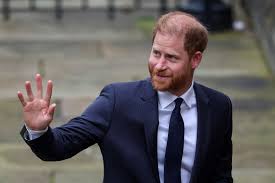
In a landmark case that has once again thrust the British press under scrutiny, Prince Harry is suing two major UK tabloids for allegations of unlawful information gathering, including phone hacking. On January 20, 2026, the High Court in London witnessed the second day of a trial that could last up to nine weeks.
The case is against Associated Newspapers Ltd (ANL), the publisher of The Daily Mail and The Mail on Sunday, which stands accused of illegally obtaining private information about Harry and six other high-profile individuals.
The tabloid giant has denied all accusations, asserting that its journalists relied on “legitimate sources” for their stories. ANL’s lawyer, Antony White, presented the newspaper’s defense, claiming that the claims against the company, which include intercepting voicemail messages, listening to private phone calls, and using deceptive methods to obtain personal information, were unfounded.
He argued that the trial would demonstrate that the articles in question were sourced through legal means and that such a large conspiracy among journalists was “inherently improbable.”
These allegations date back as far as 1993, with some instances extending to 2018. Among the claimants are not only Prince Harry, but also pop icon Elton John, his husband David Furnish, and four other prominent figures. They allege that ANL paid private investigators, who were previously implicated in other phone-hacking scandals, to gather sensitive information for dozens of articles.
In his opening statement, the claimants’ lawyer, David Sherborne, asserted that there was a “clear and systematic use of unlawful information gathering” within ANL. He suggested that years of denials by the publisher were not truthful and that the scale of the activities was significant enough to warrant substantial damages if the claimants win their case.
This case is the third major legal action Prince Harry has taken against British newspaper publishers. In 2023, he became the first senior royal in over a century to testify in a case related to phone hacking, succeeding in his claim against Mirror Group Newspapers (MGN). The following year, Harry settled with Rupert Murdoch’s UK tabloid publisher, which agreed to pay him “substantial damages” for similar privacy violations.
For Harry, this legal battle is part of a broader mission to take on the UK tabloids, which he blames for contributing to the tragic death of his mother, Princess Diana, in 1997. Diana died in a car crash in Paris while trying to escape paparazzi following her.
This case, however, is personal. Harry has long criticized the press for its intrusion into his life and the lives of his loved ones, and now, he is seeking justice for what he perceives as years of unlawful media behavior.
If the claimants are successful, it could not only bring substantial financial damages to ANL, but also have far-reaching consequences for the UK media landscape. The court’s decision may set a precedent for how the press is held accountable for privacy violations, especially in the age of invasive digital technology and social media.
As Prince Harry waits to take the stand, the proceedings will likely continue to shine a spotlight on the ethics of tabloid journalism in the UK and further expose the hidden practices that have fueled public outrage in recent years.