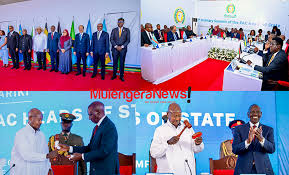
Ugandan President Yoweri Kaguta Museveni has officially assumed the role of Chairperson of the East African Community (EAC), marking the beginning of a new chapter focused on strengthening regional unity, economic growth, and collective security across East Africa.
Museveni took over the position on March 7, 2026, during the EAC Summit of Heads of State and Government held in Arusha, Tanzania, succeeding Kenyan President William Ruto. During the ceremony, Museveni expressed gratitude to Tanzanian President Samia Suluhu Hassan for hosting the summit and commended the outgoing chair for his leadership over the past year.
A Vision Centered on Regional Unity
In his first address as chair, Museveni emphasized that stronger cooperation among member states will be key to unlocking East Africa’s full potential. He highlighted the importance of expanding the region’s internal market, explaining that a larger market enables businesses to grow, increase production, create employment opportunities, and generate greater government revenue.
According to the president, deeper economic integration will help ensure that East Africa becomes a vibrant hub for trade and investment, offering opportunities for its growing population—especially the youth.
Boosting Economic Growth and Opportunities
Museveni noted that a unified regional market can transform East Africa into a powerful economic bloc capable of competing globally. By strengthening trade within the region and improving cooperation between member states, businesses will have access to millions of consumers, encouraging innovation and investment.
He also stressed that internal markets are just as important as international ones, as they provide stability and long-term growth for local industries.
Strengthening Regional Security
Another key priority outlined by Museveni is enhancing strategic security cooperation among EAC member states. He explained that coordinated defense systems across land, air, and sea—while preparing for emerging technological challenges—are vital for protecting the region’s people and resources.
Museveni pointed out that East Africa’s combined population, resources, and geographic reach give it the potential to build a strong and secure regional bloc capable of addressing modern security challenges.
Learning from History, Building the Future
Reflecting on Africa’s history, Museveni spoke about the importance of unity and resilience. He praised the efforts of Pan-African leaders and liberation movements that helped secure independence for many African nations.
He highlighted countries such as Tanzania, Ghana, and South Africa as examples of the continent’s struggle and eventual triumph over oppression, reminding leaders that cooperation and solidarity have always been key to progress.
Inspiring the Youth Toward Development
Museveni also addressed the youth of East Africa, encouraging them to focus their energy on development, innovation, and unity. He emphasized that the region’s future depends on young people choosing constructive paths that support economic growth and stability.
According to him, a united and peaceful region will create more opportunities for employment, entrepreneurship, and technological advancement.
Advancing Continental Integration
Beyond the East African Community, Museveni called on member states to remain committed to broader African initiatives such as the Common Market for Eastern and Southern Africa (COMESA) and the African Continental Free Trade Area (AfCFTA).
He stressed that regional and continental integration are essential for Africa to compete effectively in the global economy and to ensure that the continent benefits from its vast resources and talent.
A Promising Path Forward
Museveni concluded his address by expressing confidence that a united East Africa can achieve remarkable progress. By prioritizing unity, economic growth, and security, his leadership as EAC chair aims to strengthen regional cooperation, expand economic opportunities, and improve living standards for millions of citizens.
As the East African Community continues its journey toward deeper integration, the new chair’s vision highlights a shared belief across the region: that collaboration and unity will drive East Africa toward a more prosperous and secure future.