President Yoweri Museveni has proposed the establishment of a government-backed revolving fund and shared mechanical facilities aimed at transforming the livelihoods of thousands of informal mechanics operating across Kampala, as Uganda heads toward the 2026 general elections.
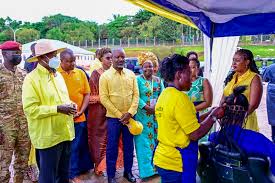
Speaking during a meeting with leaders of mechanics’ associations in the capital, Museveni said the initiative is designed to address long-standing challenges faced by small-scale artisans, including lack of access to affordable credit, poor working conditions, and limited modern equipment. He argued that these constraints have kept many skilled mechanics trapped in subsistence-level operations despite their critical role in the urban economy.
Under the proposal, the revolving fund would provide low-interest loans to organised groups of mechanics, enabling them to purchase tools, spare parts, and machinery without relying on exploitative money lenders. The loans would be repaid over time and recycled to benefit additional groups, creating what Museveni described as a “self-sustaining support system” for the sector.
In addition, the government plans to develop common service facilities—shared workshops equipped with modern diagnostic tools, lifts, and safety equipment. These centres would be jointly managed by mechanics’ cooperatives and local authorities, reducing individual costs while improving productivity and service quality.
“The problem is not skills; the problem is capital and organisation,” Museveni told the gathering. “When you bring people together, give them affordable financing and proper facilities, they can grow their businesses and create jobs.”
Kampala’s informal mechanics sector employs tens of thousands of young people, many of whom operate from roadside garages and open spaces. Despite its size, the sector remains largely informal, with limited access to formal banking, insurance, or technical training. Government officials say formalising and supporting the sector could significantly boost urban employment and tax revenues.
The proposal also includes plans for technical upgrading, with partnerships between vocational institutions and mechanics’ associations to improve skills in modern vehicle technology, including electric and hybrid engines. This, Museveni said, would help Ugandan mechanics remain competitive as the automotive industry evolves.
Some mechanics welcomed the announcement, saying access to affordable credit and shared infrastructure could be a game-changer. However, civil society groups urged transparency in the management of the fund, warning that similar initiatives in the past have struggled due to politicisation, poor oversight, and elite capture.
The proposal comes amid heightened political activity ahead of the 2026 elections, with analysts noting that urban informal workers—including mechanics and boda boda riders—represent a key voting bloc. Government officials insist, however, that the plan is part of a broader economic empowerment strategy rather than an election-driven pledge.
If implemented effectively, the revolving fund and shared facilities could mark a significant shift in how Uganda supports its informal sector—moving from rhetoric to structured investment. For Kampala’s mechanics, long accustomed to operating on the margins, the promise offers cautious hope that their work may finally receive the recognition and support it deserves.