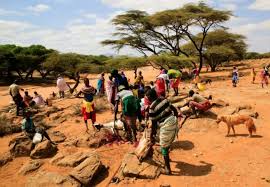
Over two million people across Kenya’s arid and semi-arid regions are at immediate risk of starvation, as the drought crisis continues to intensify.
According to the Kenya Meteorological Department, the situation has worsened significantly, with more counties entering a state of emergency as a result of failed rains during the critical October to December period.
The number of people facing acute hunger is projected to rise sharply by the end of December, increasing from 1.8 million to 2.14 million.
This is due to the failure of the seasonal rains, which has compounded the already severe drought conditions affecting the country’s dryland communities.
Pastoralist regions are particularly hard-hit. In Kajiado County, for example, farmers are grappling with exorbitant prices for hay and animal feed to keep their livestock alive, while households are struggling to provide enough food for their families.
As water sources dry up, women are forced to travel long distances to fetch what little water remains, exacerbating the hardships faced by communities.
Kajiado County, along with several other regions, is currently classified under the “alert” phase of the drought cycle. Other counties facing similar crises include Wajir, Garissa, Kilifi, Kitui, Marsabit, Kwale, Isiolo, and Tana River. These counties are suffering from severe shortages of water, pasture, and food.
Meanwhile, 13 counties, including Samburu, Turkana, and West Pokot, have entered the “normal drought phase,” signaling a growing risk of stress on food and water resources, despite being somewhat stable for now.
However, the situation in Mandera County is particularly dire, with residents already in urgent need of food and water aid.
The National Drought Management Authority (NDMA) is actively monitoring the situation across these regions. There is increasing pressure on the government and humanitarian organizations to implement immediate relief efforts, both to address the pressing needs of the population and to mitigate the long-term impact of the drought on agriculture, livestock, and overall food security.
As the situation continues to worsen, the urgency of coordinated action to support affected communities has never been clearer.
The government and local organizations are being urged to mobilize resources quickly to avoid further loss of life and livelihoods in these vulnerable regions.