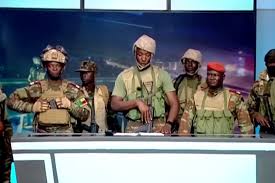
Africa has seen a sharp rise in military coups in recent years, raising concerns that takeovers in one country may be encouraging similar actions elsewhere.
Since 2020, at least 11 successful coups have taken place across the continent, alongside several failed attempts, suggesting a worrying pattern of instability.
The most recent incidents highlight this trend. In early December 2025, armed soldiers appeared on national television in Benin, announcing they had suspended the constitution and taken power.
Although the government quickly regained control, the attempt added to growing fears. Just a week earlier, military leaders in Guinea-Bissau successfully removed President Umaro Sissoco Embaló and cancelled disputed election results.
A month before that, Madagascar experienced a coup after mass protests led by young people, resulting in the military removing President Andry Rajoelina.
These events follow a broader wave of coups across countries such as Mali, Burkina Faso, Niger, Sudan, Chad, Gabon and Guinea. The United Nations Secretary-General António Guterres had already warned in 2021 that Africa was facing a “coup epidemic.”
Some experts argue that coups are not directly contagious, saying military leaders are mainly influenced by local problems such as insecurity, poor governance and weak institutions. Countries in the Sahel region, for example, share similar challenges that make them more vulnerable to military takeovers.
However, other researchers believe coup leaders do learn from events in other countries. They argue that soldiers closely watch how successful coups unfold, waiting to see whether the risks are worth taking and whether they can gain enough support to succeed.
History supports this idea. After Egypt’s 1952 military coup, it took several years before similar takeovers happened in other countries. Once Egypt’s leader, Gamal Abdel Nasser, became popular across the region, coups inspired by his success spread to Iraq, Yemen, Libya and Sudan.
In Africa today, the signals encouraging coups are much stronger and faster. Many coup leaders enjoy public support, especially where citizens are frustrated by corruption and poor leadership.
Surveys show growing acceptance of military rule in some countries. In Benin, for instance, support for army rule has risen sharply over the past decade.
International reactions also play a role. In many cases, global and regional responses to coups have been weak or temporary. Some military leaders who seized power later gained international acceptance or even won elections, despite rules against coup leaders running for office. This sends a message that taking power by force may come with few long-term consequences.
As a result, would-be coup plotters may feel encouraged to act, believing they can gain support at home and face limited punishment abroad.
Experts warn that unless stronger action is taken by both African leaders and the international community, the cycle of military takeovers may continue to spread across the continent.