Authorities in North Korea have reported an almost perfect voter turnout in the country’s latest parliamentary elections, with state media claiming that 99.99 percent of registered voters participated.
According to the country’s official news agency, Korean Central News Agency (KCNA), citizens across the nation cast their ballots on Sunday to elect delegates to the country’s legislature, the Supreme People’s Assembly (SPA). Voting reportedly concluded at 6:00 p.m., with nearly all registered voters taking part in the process.
The SPA serves as North Korea’s highest legislative body, though it is widely considered a ceremonial institution that largely approves decisions made by the ruling party. Elections for the assembly typically feature a single candidate per constituency, nominated by the government and approved by the ruling political structure.
The vote took place shortly after a major meeting of the country’s ruling party, the Workers’ Party of Korea, which is held once every five years to set national priorities on key issues such as economic development, diplomacy, and defense strategy.
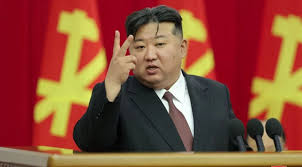
North Korean leader Kim Jong Un also participated in the election, casting his vote at a coal mine in the Sunchon area north of the capital. According to state media, he later delivered a speech and posed for photographs with local miners after voting.
Attention is now turning to the next meeting of the Supreme People’s Assembly, where observers will be watching closely for potential political developments. One key question is whether Kim Jong Un will be formally named president—a position historically associated with his grandfather, Kim Il Sung, the founder of North Korea.
The presidency has long held symbolic importance in the country’s political system, and any decision regarding the role could signal further consolidation of power within the leadership structure.
North Korea’s elections often draw international scrutiny due to the country’s tightly controlled political environment, limited political competition, and the state’s dominant role in organizing and reporting the results. Nevertheless, the government portrays the process as a demonstration of national unity and political participation.