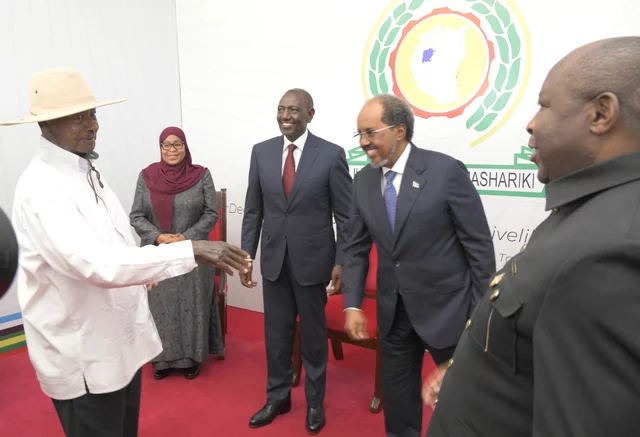
A recent decision by East African heads of state regarding the payment of East African Legislative Assembly (EALA) representatives is generating discussion across the region, with many observers viewing it as a practical step toward sustaining the East African Community (EAC) institutions during financial challenges.
During the March 7, 2026 Summit, leaders resolved that partner states will directly take responsibility for paying the salaries and benefits of their respective representatives in EALA. The decision comes at a time when the EAC Secretariat is experiencing financial pressure due to delays in member states’ contributions.
Supporters say the move is a pragmatic solution designed to keep the regional parliament functioning smoothly while ensuring that lawmakers continue their work of promoting cooperation and policy harmonization across East Africa.
Ensuring Stability for Regional Institutions
The East African Legislative Assembly remains one of the core institutions of the EAC, playing a central role in debating regional laws, policies, and development strategies.
By allowing partner states to temporarily shoulder the financial responsibility for their representatives, leaders aim to maintain institutional stability and avoid disruptions to legislative activities while broader financial solutions are explored.
Analysts note that such adjustments can help strengthen accountability at the national level while still supporting regional decision-making processes.
Legal and Administrative Discussions Continue
In Uganda, the directive has sparked discussions about how the arrangement fits within existing legal frameworks. Article 78 of the Constitution of the Republic of Uganda defines Members of Parliament as those elected to represent constituencies and whose remuneration is set by the Parliamentary Commission.
Kira Municipality MP Ibrahim Ssemujju Nganda, a member of the parliamentary Budget Committee, pointed out that the matter may require further legal interpretation or legislative adjustments to ensure alignment with national law.
Such discussions, observers say, are part of the normal process of refining regional cooperation mechanisms, especially as the East African Community continues to evolve.
Unique Role of EALA Representatives
Former EALA legislator Mukasa Mbidde highlighted that members of the regional parliament already operate within a distinct professional framework that reflects their cross-border responsibilities.
Unlike many national lawmakers, EALA members often work under arrangements similar to diplomats when the Assembly sits in different partner states. They receive benefits comparable to national legislators, including facilitation such as vehicles, while representing the collective interests of the East African region.
Their role remains central to advancing policies that promote trade, mobility, and shared economic growth across partner states.
A Step in the Continuing Integration Journey
The East African Community has already achieved significant milestones, including the establishment of a customs union and a common market, with plans for a future monetary union.
Observers say the new salary directive reflects the region’s willingness to adapt and find workable solutions during financial constraints, ensuring that integration efforts continue moving forward.
As national parliaments review and interpret the directive, the discussion is expected to encourage deeper dialogue on how best to sustain and strengthen regional institutions that serve millions of East Africans.
For many analysts, the debate ultimately underscores a positive reality: East Africa remains actively engaged in shaping the future of its integration project, demonstrating resilience and commitment to regional cooperation.