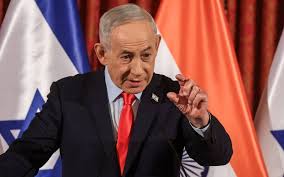
Israeli Prime Minister Benjamin Netanyahu has dismissed circulating social media rumours claiming he had died, responding with humor in a short video posted online on Sunday.
In the video shared on his official account on X (Twitter), Netanyahu is seen sitting at a café outside Jerusalem while being served a cup of coffee. Mocking the false reports, he joked, “I’m dead for coffee,” using a common Hebrew expression that means loving something intensely rather than literally being dead.
The prime minister also addressed speculation that one of his recent televised speeches had been generated using artificial intelligence. Some social media users had pointed to an image from the broadcast where his hand appeared to have six fingers—fueling claims that the footage might have been digitally altered.
In response, Netanyahu raised his hands toward the camera in the video and quipped, “Do you want to count the number of fingers?” in an apparent attempt to put the rumours to rest.
Despite the light-hearted tone of the clip, Netanyahu also used the moment to deliver a more serious message to Israeli citizens. He urged the public to continue following safety instructions in the event of incoming rocket attacks, emphasizing the importance of national resilience.
According to the prime minister, the strength shown by Israeli citizens supports the work of the government, the military, and the country’s intelligence services, including the Mossad.
Netanyahu further hinted at ongoing military actions, saying that Israel is carrying out operations that cannot yet be publicly disclosed. He claimed that Israeli forces are striking targets linked to Iran as well as in Lebanon.
The remarks come amid heightened tensions in the region. Iran’s powerful military organization, the Islamic Revolutionary Guard Corps (IRGC), reportedly issued threats against Netanyahu, with Iranian state media saying the group had vowed to pursue and kill the Israeli leader if he were still alive.
The exchange highlights the escalating rhetoric and tensions surrounding the ongoing conflict involving Israel, Iran, and regional actors, as well as the growing role of social media in spreading both misinformation and political messaging during times of crisis.