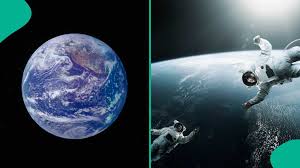
A new study by NASA, in collaboration with Toho University in Japan, has sparked global debate after powerful simulations suggested that Earth’s ability to support life could end far sooner than once believed.
Using one of the world’s most advanced supercomputers, researchers modeled the long-term impacts of solar radiation, climate change, and the Sun’s natural evolution — producing one of the most comprehensive forecasts of Earth’s distant future ever attempted.
The findings, published in the journal Nature, warn that the delicate balance of conditions sustaining life on Earth is already shifting — and that both natural and human-driven factors are accelerating the planet’s decline.
The NASA-Toho team simulated the planet’s atmospheric and ecological responses over the next billion years. The results were sobering.
While the Sun is expected to expand into a red giant in about 5 billion years, researchers found that Earth’s surface could become uninhabitable hundreds of millions of years before that, due to a steady increase in solar brightness and temperature.
“For decades, scientists assumed life on Earth could continue for another billion years or more,” said Dr. Kazumi Ozaki, the study’s lead researcher. “However, even slight increases in the Sun’s output could trigger runaway climate effects much earlier.”
The study found that as solar radiation intensifies, global temperatures will rise, oceans will gradually evaporate, and the atmosphere will thin — setting off a cascade of catastrophic environmental changes.
According to NASA’s simulations, Earth’s oceans will likely begin to evaporate long before the Sun transforms into a red giant. Once oceans disappear, the planet’s natural climate regulation will collapse, leading to a permanent greenhouse effect.
By the projected year 1,000,002,021, Earth could become a barren, desert-like world, similar to present-day Venus — too hot for liquid water, too thin in atmosphere for complex life, and devoid of ecosystems.
“The loss of oceans will be the turning point,” the report noted. “Without them, the climate system, oxygen cycles, and biodiversity that sustain life will cease to function.”
While this distant timeline may sound abstract, researchers stress that the immediate concern is much closer to home — as humanity’s own activities are hastening planetary changes that mimic this natural process.
NASA’s models incorporated human-induced effects such as greenhouse gas emissions, deforestation, and industrial pollution, finding that these are amplifying the Sun’s natural warming trend.
Even before natural solar brightening becomes significant, anthropogenic climate change could make many regions uninhabitable within the next few centuries.
“Our simulations show that the boundary between natural and human-driven climate change is becoming blurred,” said Ozaki. “We are accelerating processes that were meant to unfold over geological timescales.”
Declining oxygen levels, food insecurity, and extreme weather patterns could trigger what scientists term a “civilizational tipping point” — a scenario where sustaining human society becomes nearly impossible within just a few hundred years.
The Sun, currently a stable yellow dwarf, emits slightly more energy each century as it ages. This steady solar brightening means that over geological time, the Earth absorbs more heat.
This process was once thought too gradual to matter for current generations, but the combination of solar and human effects could bring forward many of the predicted consequences.
“Even minor increases in solar intensity can destabilize weather systems, melt polar ice, and disrupt the carbon cycle,” explained Dr. Maria Ortega, a NASA climate physicist who contributed to the study. “It’s not just a far-future scenario — it’s a mirror of what’s beginning to unfold today.”
The research reignited debate within the scientific community over interplanetary survival strategies, including potential colonization of Mars or other habitable exoplanets.
While NASA and private entities like SpaceX and Blue Origin are investing heavily in space exploration, scientists caution that preserving Earth remains humanity’s best option for the foreseeable future.
“There’s no planet as perfectly suited for life as Earth,” Ozaki said. “If we can’t maintain the one we have, survival elsewhere will be infinitely harder.”
Despite the distant timeline of Earth’s ultimate demise, experts emphasize that the real warning lies in the short-term trajectory.
If greenhouse gas emissions continue unchecked, the planet could see irreversible damage within the next few centuries — a blink of an eye in cosmic terms.
The study concludes with a call for urgent climate action and technological innovation to slow Earth’s self-destruction.
“The end of habitability may be inevitable in the very long run,” Ozaki said, “but how soon we reach that point — and whether humanity survives to see it — depends entirely on what we do in this century.”