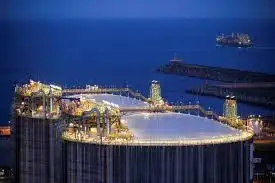
Key energy facilities across the Middle East have come under sustained attack amid the escalating conflict involving Iran, Israel, and the United States, raising fresh concerns over global energy supplies.
Among the most affected is the Ras Laffan Industrial City in Qatar, the world’s largest liquefied natural gas (LNG) hub. The facility has suffered extensive damage following repeated Iranian strikes, with QatarEnergy reporting significant fires and damage across several LNG installations.
The attacks follow earlier strikes that had already disrupted operations, forcing QatarEnergy to halt LNG production and declare force majeure. Qatar shares the vast North Field gas reserve with Iran, which accounts for a significant portion of global natural gas resources.
In Iran, the South Pars gas field—the world’s largest known natural gas reserve—was also hit, triggering a fire. The field supplies approximately 70 percent of Iran’s domestic gas needs and is jointly shared with Qatar.
Meanwhile, Kharg Island, a critical hub handling about 90 percent of Iran’s crude oil exports, was targeted in U.S. strikes. Despite the attack, Iranian authorities reported that exports continued without disruption and no casualties were recorded.
Tensions have also spread across the Gulf, with the Ruwais Refinery in Abu Dhabi halting operations as a precaution following a drone attack on its industrial complex. Similarly, Saudi Arabia’s Ras Tanura Refinery—one of the largest in the region—was struck earlier in the conflict, causing a fire and partial shutdown, though operations have since resumed.
The escalating strikes have significantly disrupted regional oil production, with output dropping from approximately 30 million barrels per day last year to around 20 million, according to the International Energy Agency.
The conflict has also sent shockwaves through global markets, with oil prices surging sharply. Brent crude rose by more than five percent, briefly exceeding $112 per barrel.
Analysts warn that continued attacks on critical energy infrastructure could have far-reaching consequences for global supply chains and energy security, as tensions in the region show little sign of easing.