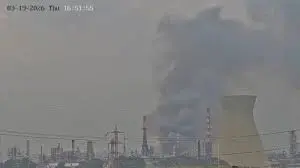
The conflict between Israel and Iran intensified on Friday, with both nations launching new attacks that signal a deepening and increasingly dangerous phase of the war. The latest escalation comes just a day after Tehran targeted a key Israeli oil refinery, further heightening regional and global tensions.
Israeli forces struck targets in Tehran, describing the operation as an attack on the “infrastructure of the Iranian terror regime,” though specific details were not disclosed. In response, Iran fired a barrage of missiles toward Israel, triggering air raid sirens across Tel Aviv and lighting up the skies with interceptor explosions.
The conflict, which began after a joint military campaign by the United States and Israel in late February, has already claimed thousands of lives—most of them in Iran and Lebanon—and continues to spill across the wider Middle East. What began as a targeted operation has evolved into a broader regional crisis with far-reaching consequences.
One of the most alarming developments is the growing impact on global energy infrastructure. Iran has expanded its retaliation beyond direct military targets, striking critical facilities across the region. A major blow came when Qatar’s Ras Laffan Industrial City—a hub responsible for a significant share of the world’s liquefied natural gas—was hit, causing damage expected to take years to repair.
Elsewhere, attacks have targeted vital النفط routes and facilities, including a key Saudi port on the Red Sea. Even countries not directly involved in the conflict, such as the United Arab Emirates and Kuwait, have reported missile and drone threats, underscoring how widely the crisis is spreading.
Despite these disruptions, oil prices showed some signs of stabilizing after Western nations and Japan pledged to help secure shipping routes through the Strait of Hormuz, a critical passage for global oil supplies. However, the risk of a major energy shock remains high.
Political tensions have also surfaced among allies. Donald Trump has publicly urged restraint, warning Israel against further strikes on sensitive energy infrastructure, including gas fields shared with regional partners. Meanwhile, Benjamin Netanyahu maintained that Israel acted independently in certain operations, highlighting potential divisions in strategy.
As the war enters what Iranian officials describe as a “new stage,” the focus appears to be shifting toward economic and energy targets, raising the stakes even further. Iran has warned that continued attacks on its infrastructure will be met with broader and more destructive retaliation against the energy assets of its adversaries and their allies.
With no clear path to de-escalation, global powers including Britain, France, Germany, and Japan have expressed readiness to support efforts to secure vital trade routes and stabilize energy markets. Still, many remain hesitant to become directly involved in a conflict that shows no immediate signs of resolution.
As tensions mount and the humanitarian and economic costs continue to rise, the world watches closely. The conflict is no longer confined to military objectives—it now threatens global stability, energy security, and the fragile balance of international relations.