The reported death of Iran’s Supreme Leader Ayatollah Ali Khamenei has shifted attention to one of the most closely watched figures in the country’s religious and political landscape — Hassan Khomeini, the grandson of the late revolutionary leader Ayatollah Ruhollah Khomeini.
Hassan Khomeini, a mid-ranking cleric, has long been seen as a symbolic link to Iran’s 1979 Islamic Revolution. As the grandson of the republic’s founding father, he carries a powerful family legacy that resonates deeply with many Iranians, particularly reform-minded groups.
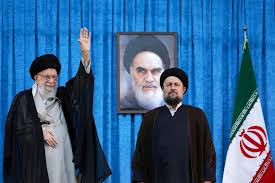
Although he does not currently hold a senior political position within Iran’s governing structure, his name frequently surfaces during discussions about potential future leadership roles. His public appearances alongside senior officials, including the late Khamenei at major commemorative events, have kept him within the national spotlight.
Iran’s system of leadership succession is determined by the Assembly of Experts, a body of clerics responsible for selecting the Supreme Leader. The process typically involves religious credentials, political influence, and institutional support within key power centers such as the Revolutionary Guards and the clerical establishment.
Hassan Khomeini is often viewed as more moderate compared to some hardline figures within Iran’s political system. He has expressed views in the past that align more closely with reformist ideals, including calls for greater political openness and social flexibility. However, his relatively independent stance has also led to resistance from conservative factions.
Political analysts note that while his revolutionary lineage gives him symbolic strength, actual succession decisions are shaped by complex power dynamics. Other senior clerics and political figures are also expected to emerge as contenders in what could become a sensitive and carefully managed transition.
The leadership question comes at a time of heightened regional tensions and internal challenges for Iran, including economic pressures and international scrutiny. Stability within the country’s leadership structure will be closely monitored both domestically and internationally.
As Iran navigates this uncertain period, Hassan Khomeini’s name is once again in focus — not only because of his family heritage, but also because of what his potential role could signal for the future direction of the Islamic Republic