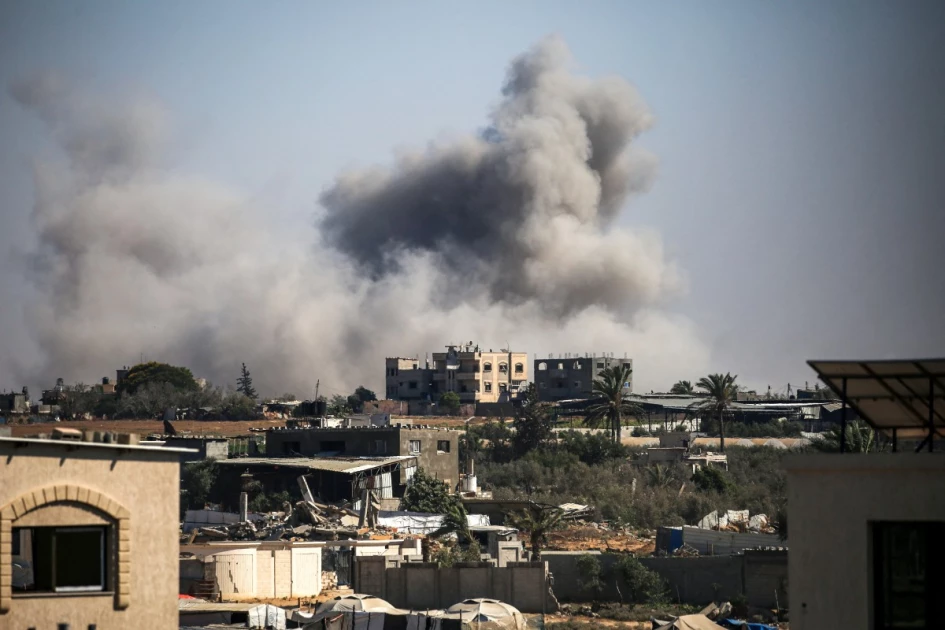
Ayatollah Ali Khamenei, who led Iran as Supreme Leader for 36 years, has reportedly been killed in US and Israeli airstrikes, according to Iranian state media. His death marks the end of one of the longest and most consequential leadership tenures in the history of the Islamic Republic.
For more than three decades, Khamenei stood at the centre of Iran’s political, military and religious power structure. Though he succeeded the revolutionary founder of the Islamic Republic, Ayatollah Ruhollah Khomeini, in 1989, many observers argue that Khamenei ultimately wielded even greater authority than his predecessor.
Yet despite the longevity of his rule, his legacy remains deeply divisive. While loyalists credit him with defending Iran’s sovereignty and expanding its regional influence, critics say his era was defined by repression, economic hardship and the steady erosion of political freedoms.
From Revolutionary Cleric to Supreme Authority
Born in Mashhad in 1939, Khamenei was shaped by years of religious study in Najaf and Qom, where he embraced revolutionary Islamic thought. He became a committed follower of Khomeini’s ideology — often referred to as “Khomeinism” — which fused Shia theology with anti-colonial and anti-Western political doctrine.
Central to this ideology is velayat-e faqih, or “guardianship of the jurist,” a doctrine granting sweeping authority to a single Islamic scholar to oversee the state. This principle formed the foundation of the Islamic Republic and later cemented Khamenei’s dominance.
After the 1979 revolution toppled Shah Mohammad Reza Pahlavi, Khamenei rose rapidly through the ranks. He helped establish the Islamic Revolutionary Guard Corps (IRGC), served as deputy defence minister, survived an assassination attempt in 1981, and later became Iran’s president during the devastating Iran–Iraq War.
When Khomeini died in 1989 without a clear successor, Khamenei was chosen by the Assembly of Experts. His appointment was controversial, as some clerics argued he lacked the necessary religious rank. A constitutional amendment later removed that barrier, formally consolidating his authority.
Expanding Power and Crushing Dissent
Over time, Khamenei strengthened the office of the supreme leader beyond what Khomeini had exercised. Constitutional changes allowed him to set overarching state policies, appoint key judicial and military officials, influence electoral outcomes, and intervene directly in legislation.
While he occasionally worked alongside reform-minded presidents, including Mohammad Khatami and Hassan Rouhani, he frequently blocked political reforms and limited engagement with the West.
His most defining domestic moment came after the disputed 2009 presidential election, when mass protests erupted nationwide. Khamenei endorsed the results and authorised a harsh crackdown that led to arrests, deaths and widespread international condemnation.
In subsequent years, further waves of unrest — including large-scale demonstrations in late 2025 and early 2026 — were met with similarly forceful responses. Human rights groups accused his government of using excessive force to suppress dissent.
Foreign Policy and Regional Strategy
Khamenei was the architect of Iran’s regional proxy strategy, supporting allied groups across the Middle East to counter Western and Israeli influence. Under his leadership, Iran expanded its military footprint indirectly through networks that included Hezbollah, Hamas and other aligned factions.
Though at times open to diplomatic negotiations — most notably during talks surrounding Iran’s nuclear programme — his stance hardened after the collapse of the 2015 nuclear agreement and the reimposition of US sanctions.
In his final years, Iran faced mounting economic strain, rising inflation and growing public frustration. Critics argue that foreign policy ambitions came at the expense of domestic stability.
A Complex and Contentious Legacy
Unlike Khomeini, whose 1989 funeral drew millions of mourners, analysts suggest Khamenei’s passing may evoke a more muted public response. While his supporters will remember him as a steadfast defender of the Islamic Republic, many Iranians associate his rule with economic decline, social restrictions and political repression.
After 36 years in power, Khamenei leaves behind a nation at a crossroads — politically divided, economically strained and uncertain about its future leadership structure.
His tenure reshaped Iran’s institutions and regional posture in lasting ways. Whether history judges him as a guardian of the revolution or as a leader whose rigidity weakened the state may ultimately depend on what follows.