Kenya’s soaring public debt, an overstretched wage bill, and longstanding land injustices are the leading forces driving millions of Kenyans into poverty, according to two new reports released by the Kenya Human Rights Commission (KHRC).
The reports warn that government economic policies are increasingly diverting national resources away from essential services such as health, education, development, and social protection, worsening inequality and eroding the quality of life for ordinary citizens.
Debt and Wage Bill Consuming Kenya’s Revenues
The first report, “The Economics of Repression,” paints a stark picture of the country’s financial reality. It reveals that 68% of all ordinary government revenue is immediately spent on two areas:
servicing public debt, and
paying the government wage bill.
Economic analyst Annette Nerima notes that such a spending pattern leaves little room for investment in critical public services:
“This quagmire crowds out resources for infrastructure, economic rights, health, and education.”
KHRC’s findings show that interest payments on public debt have surged sharply—from 18% to 25% of total government spending in just four years. This rise has strained budgets meant for vulnerable groups:
Funding for older persons has dropped from Ksh.18 billion to Ksh.15 billion.
Support for orphans has declined from Ksh.7 billion to Ksh.5 billion.
Counties Facing Harsh Realities
At the county level, especially in the capital Nairobi, the effects are immediate. Real health spending has fallen from Ksh.8 billion to Ksh.7 billion, despite serving more than 5.7 million residents. Meanwhile, pending bills continue to rise as the wage bill consumes nearly half of the county’s total budget.
KHRC Executive Director Davis Malombe has called for stronger oversight from Kenya’s legislators:
“We ask parliament to check the executive because they are not upholding the constitution or doing their job.”
Land Injustice at the Heart of Poverty
The second report, “Who Owns Kenya?” links Kenya’s economic crisis to deep-rooted land inequality dating back to colonial policies and political favoritism.
The report shows that:
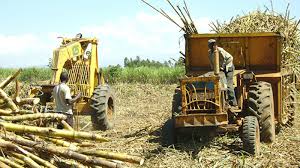
Less than 2% of Kenyans own more than half of all arable land, and
0.1% of large-scale landowners hold 39% of farmed land.
In contrast, 98% of all Kenyan farmers, with average holdings of just 1.2 hectares, share only 46% of agricultural land.
Social justice advocate Gladys Mongare says this disparity is the foundation of many of Kenya’s hardships:
“Most land owned by the 0.1% is kept idle for speculation, while millions of Kenyans don’t even own an eighth of an acre. The source of poverty in Kenya is land injustice.”
A Tale of Two Economies
The KHRC reports argue that Kenya now operates under two parallel systems:
One that protects the wealth and vast land holdings of the elite with minimal taxation.
Another in which ordinary citizens face high taxes on basic goods and reduced access to public services.
This imbalance, the reports warn, is entrenching poverty and weakening social safety nets.
Proposed Solution: A National Land Value Tax
To address the inequality, KHRC is proposing a national land value tax targeting idle and speculative land. According to the Commission, this move could unlock significant revenue—estimated at Ksh.125 billion, almost twice the current social protection budget.
Such revenue would support essential services, improve development outcomes, and potentially reduce reliance on costly public debt.