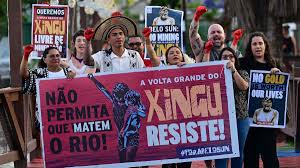
Dozens of Indigenous demonstrators once again disrupted the United Nations climate summit in Belem, Brazil, on Friday, demanding global attention for their fight to protect the Amazon and their traditional territories.
Around sixty Indigenous men and women, dressed in traditional attire and wearing vibrant headdresses, formed a human blockade at the entrance to the summit venue. Some were carrying babies, while others held up banners with messages such as “Fighting for our territories is fighting for our lives.” Their goal was clear: to force a dialogue with Brazilian President Luiz Inácio Lula da Silva about the protection of their land and to raise awareness of the ongoing struggles they face in the Amazon.
The protestors stood their ground under the blazing Brazilian sun, blocking the way for thousands of delegates who were arriving for the talks. As diplomats were escorted through side doors, the protesters refused to move until their demands were heard.
This marked the second disruption of the summit this week, as Indigenous groups have grown increasingly vocal about issues in the Amazon region. The summit is taking place in Belem, a city located along the Amazon River, which is at the heart of the world’s largest rainforest.
COP30 President André Correa do Lago acknowledged the demonstrators’ “strong and very legitimate concerns” and responded by stepping outside to meet with the group. During their consultation, protestors presented a document outlining their grievances, and in a nearby hall, they sang, danced, and chanted in unity.
Correa do Lago described the dialogue as “very positive and constructive,” and reassured the group that their concerns would be addressed.
Despite the protest, security around the venue remained tight, with dozens of armed soldiers and military police guarding the entrance. However, the UN assured delegates that the situation posed “no danger” to the conference.
The protestors, primarily from the Munduruku community, are demanding the expedited demarcation of their ancestral lands.
Additionally, they are fiercely opposed to the Ferrograo railway project—a nearly 1,000-kilometer (620-mile) route that will cross Brazil to transport grain. The project threatens to further encroach on Indigenous lands and could accelerate deforestation in the region.
“Come on, Lula, show yourself!” shouted Alessandra Korap, an Indigenous leader from the Munduruku community, urging the Brazilian president to meet with them directly. “We want to be heard, we also want to participate in the negotiations. We have too many problems.”
President Lula has positioned himself as an ally of Indigenous peoples, having made strides in recognizing tribal groups and reducing deforestation in the Amazon. He also created the Ministry of Indigenous Peoples, a historic step in acknowledging their rights.
However, many Indigenous groups feel that progress on land demarcation has been too slow and that new challenges, such as oil exploration near the mouth of the Amazon, are exacerbating their concerns.
In a recent statement, iconic Indigenous leader Raoni expressed his frustration over the situation, vowing to meet with Lula over the controversial Ferrograo railway and oil exploration. “If necessary, I’ll give him a good talking-to,” he said, referring to the Brazilian president.
As the demonstration continued for more than two hours, attendees of the climate talks, who had been waiting outside in the heat, were eventually able to enter the venue.
The protestors left after their concerns were heard, but the event highlighted the growing tensions surrounding the future of the Amazon and the role of Indigenous communities in protecting it.
Earlier in the week, a similar protest had led to clashes between demonstrators and security forces at the summit venue. In response to questions about whether additional security measures were needed, Correa do Lago downplayed the incidents, calling the disturbances “minor” and stating that no further precautions were necessary.
The disruption underscores the deepening divisions over the management of the Amazon and the future of Indigenous rights in Brazil. As the summit continues, it remains to be seen whether these issues will be addressed in meaningful ways by world leaders.