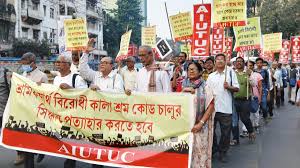
Ten major trade unions in India have strongly condemned the government’s rollout of new labour codes, calling them a “deceptive fraud” that harms workers instead of protecting them. The unions, many of which are aligned with opposition parties, are now planning nationwide protests on Wednesday to demand that the laws be withdrawn.
The new labour codes — the biggest changes to India’s employment laws in decades — were officially implemented on Friday. Although they were approved by parliament five years ago, the government has only now enforced them, saying the reforms simplify outdated rules from the colonial era and improve worker protections through better social security and minimum wage guarantees.
However, unions argue that the changes mainly benefit employers, not workers.
Why Unions Are Angry
The new laws:
Make it easier for companies to hire and fire workers
Increase the maximum number of workers a company can lay off without government approval from 100 to 300
Allow longer factory shifts
Permit women to work night shifts
Require states to draft new rules on wages, safety, and social security
Unions say these changes weaken job security, reduce worker rights, and expose women to unsafe working conditions.
Protests Already Underway
On Saturday, hundreds of members of the Centre of Indian Trade Unions (CITU) marched in Bhubaneswar, burning copies of the new labour codes as a sign of defiance.
The protesting unions say they will intensify demonstrations if the government does not withdraw the laws.
Government and Business Responses
The Labour Ministry did not immediately comment on the protests. However, government documents show it has held more than a dozen consultations with unions since June 2024.
Businesses have mixed reactions:
Some large companies support the reforms, saying they will boost investment and make manufacturing more competitive.
But the Association of Indian Entrepreneurs warned the new rules may increase costs for small and medium-sized businesses and risk disrupting operations.
Not All Unions Oppose the Laws
The Bharatiya Mazdoor Sangh (BMS), a union affiliated with the ruling party, supports the labour reforms. It has encouraged Indian states to implement the new rules after further consultations.
What Happens Next?
Indian states must now create detailed regulations based on the federal labour codes. Until then, confusion and resistance are expected to continue.
Unions say Wednesday’s nationwide protests will be only the beginning if the government refuses to reconsider the laws.