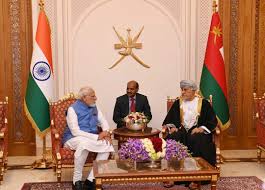
India has signed a comprehensive economic partnership agreement with Oman, marking a significant step in New Delhi’s efforts to deepen ties in the Middle East, diversify export markets, and cushion its economy against steep US tariffs.
The agreement, signed on Thursday during Prime Minister Narendra Modi’s visit to Muscat, is designed to boost bilateral trade and investment between the two countries, whose annual trade already exceeds $10 billion, according to India’s trade ministry.
Under the pact, Oman will grant zero-duty access on more than 98 percent of its tariff lines, effectively covering almost all Indian exports. Key sectors set to benefit include gems and jewellery, textiles, pharmaceuticals, automobiles, engineering goods, and chemicals.
In return, India will reduce tariffs on about 78 percent of its tariff lines, accounting for nearly 95 percent of imports from Oman by value, significantly easing access for Omani goods into the Indian market.
Strategic and economic importance
The agreement carries strategic significance beyond trade. Oman occupies a critical geographic position near the Strait of Hormuz, a narrow waterway between Oman and Iran through which a substantial share of the world’s oil shipments passes. Strengthening ties with Muscat bolsters India’s energy security and regional presence in the Gulf.
“This pact will set a new pace for our trade, add new trust to our investments and open doors to new opportunities in many sectors,” Prime Minister Modi said in an address in Oman.
The deal is India’s second major trade agreement this year, following one signed with the United Kingdom, and comes as Indian exporters intensify efforts to diversify markets amid rising global trade tensions.
Shielding against US tariffs
The pact also reflects India’s push to counter the impact of punitive US trade measures. In late August, US President Donald Trump doubled duties on Indian goods to 50 percent, the highest tariff rate imposed on any country. The increase included a 25 percent levy imposed in retaliation for India’s continued purchases of Russian oil.
Despite prolonged negotiations, India has so far been unable to finalize trade agreements with either the United States or the European Union this year, making alternative partnerships increasingly critical.
“This deal is as much about geopolitics and regional presence as it is about tariffs,” said Ajay Srivastava, founder of the Global Trade Research Initiative.
Opportunities and exclusions
The agreement is expected to significantly boost India’s gems and jewellery exports, which industry leaders estimate could rise from about $35 million to nearly $150 million over the next three years.
It also opens new opportunities in Oman’s $12.5 billion services import market, where India currently holds just a 5.3 percent share, offering growth potential in areas such as IT services, healthcare, education, and professional services.
However, certain sensitive sectors — including dairy, tea, coffee, rubber, and tobacco — have been excluded from the pact to protect domestic producers in both countries.
A milestone for Oman
For Oman, the agreement marks a major milestone, as it is the Gulf state’s first bilateral trade agreement since its 2006 deal with the United States. The pact signals Muscat’s intent to broaden economic partnerships and attract foreign investment as it pursues economic diversification.
Overall, the India-Oman trade pact strengthens economic integration, enhances strategic cooperation, and underscores India’s broader effort to secure new trade corridors and partnerships in an increasingly fragmented global trade environment.