Kenya’s poultry sector is undergoing a quiet transformation as improved genetics in indigenous chicken breeds significantly boost productivity, helping to strengthen national food security and improve household incomes.
The poultry industry in Kenya continues to grow steadily, driven by rising demand for affordable animal protein and increasing recognition of the sector’s role in food and nutrition security. Poultry meat and eggs are widely consumed across the country, making the sector a strategic priority for both rural and urban food systems.
At the centre of this progress are genetic improvement programmes led by institutions such as the Kenya Agricultural and Livestock Research Organization (KALRO). Through selective breeding and scientific research, indigenous chicken breeds are being developed to grow faster, produce more eggs and demonstrate greater resilience to disease and harsh climatic conditions, while retaining traits valued by local farmers and consumers.
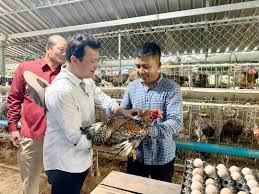
Dr Ann Wachira, a poultry geneticist at the KALRO hatchery in Naivasha, says improved indigenous chickens offer a practical solution for smallholder farmers who make up the majority of poultry producers in Kenya. Unlike exotic breeds, these improved local chickens are better adapted to local environments and can thrive under low-input production systems.
“The goal is to increase productivity without losing the hardiness of indigenous breeds,” Dr Wachira explains. “By improving genetics, farmers are able to get more meat and eggs from the same number of birds, which directly improves food availability and incomes.”
The improved breeds mature faster and have higher egg-laying capacity compared to traditional local chickens, allowing farmers to supply markets more consistently. This is particularly important in rural and peri-urban areas, where poultry farming plays a critical role in household nutrition, women’s empowerment and youth employment.
Beyond household consumption, the growing productivity of the poultry sector is strengthening Kenya’s food supply chains. Increased production helps stabilise prices of eggs and poultry meat, making protein more accessible to low- and middle-income households.
The government and development partners have identified poultry as a key subsector for achieving national food security goals, especially as climate change continues to affect crop and livestock production. Improved poultry genetics provide a climate-smart option, requiring less land and water than many other livestock enterprises.
However, experts note that genetics alone are not enough. Continued investment in farmer training, access to quality feed, disease control and reliable markets remains essential to fully realise the benefits of genetic improvements.
As Kenya works to meet the nutritional needs of a growing population, improved indigenous poultry breeds are proving to be a vital tool. By combining science with traditional farming systems, the poultry sector is playing an increasingly important role in ensuring food security, improving livelihoods and supporting sustainable agricultural growth.