A local petroleum exploration and production company, Gulf Energy, has reaffirmed its commitment to invest nearly Ksh.774 billion (USD 6 billion) in the South Lokichar Oil Project in Turkana County, setting December 1, 2026 as the target date for first oil production.
Appearing Before Parliament
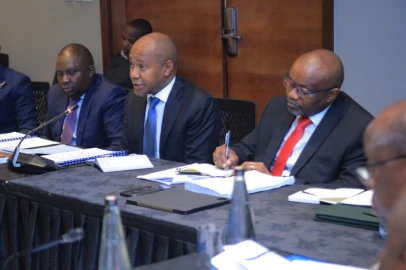
Speaking before a Joint Parliamentary Committee on Energy, Gulf Energy E&P BV Chairman Francis Njogu described the project as the largest private-sector upstream petroleum investment in Kenya’s history.
The session was jointly chaired by National Assembly Energy Committee Chairperson David Gikaria and Senate Energy Committee Vice Chairperson William Kisang. The meeting forms part of the public participation process ahead of Parliament’s ratification of the project’s Field Development Plan (FDP).
Njogu told lawmakers that the company is financially ready and has secured strong partnerships with both local and international financial institutions to support the capital-intensive project.
Focus on Local Jobs and Community Benefits
Gulf Energy said the project will prioritise local content, job creation, and community development in Turkana County.
“We are approaching this project as Kenyans, with the goal of creating jobs and business opportunities, starting with the Turkana host community,” Njogu said.
He noted that the Field Development Plan and the Production Sharing Contracts (PSCs) place strong emphasis on local participation, social investment, and transparent operations.
The company also pledged to follow strict environmental and safety standards in line with Kenyan law and international best practice.
Kenya’s Expected Benefits
According to government projections, Kenya could earn between:
USD 1.05 billion (Ksh.136 billion) at $60 per barrel
USD 2.9 billion (Ksh.371 billion) at $70 per barrel
over the life of the project.
Under the Production Sharing Contract framework, the Government of Kenya retains full ownership of the oil resources, while Gulf Energy provides the technical expertise and investment capital required to extract and produce the oil.
Urgency Amid Global Energy Shift
Njogu warned that the global energy transition is narrowing financing opportunities for new oil projects. He said international lenders are tightening funding criteria due to climate commitments, making timely approval of the project crucial.
“Any prolonged uncertainty could put Kenya at a disadvantage compared to other emerging oil-producing countries competing for the same capital,” he said.
Next Steps
The Field Development Plan was approved by Energy and Petroleum Cabinet Secretary Opiyo Wandayi in November 2025. Parliament is now expected to debate and decide on its ratification in the coming weeks.
If approved, the South Lokichar project could mark Kenya’s transition into a full oil-producing nation and significantly boost economic growth, revenue generation, and employment opportunities in Turkana and beyond.