Guatemala City — In response to escalating violence and a deadly prison standoff, President Bernardo Arevalo declared a 30-day nationwide state of emergency on Sunday, January 18, 2026, to combat criminal gangs operating within the country. This declaration follows a brutal attack on law enforcement officers and a hostage situation at three major prisons across the country.
The deadly standoff, which unfolded over the weekend, began when inmates, affiliated with the notorious Barrio 18 and Mara Salvatrucha (MS-13) gangs, took 46 hostages across three prisons. Their demand: the transfer of gang leaders to lower-security facilities. The crisis culminated in the tragic killing of eight police officers and the wounding of ten others in retaliatory gang attacks, which took place just hours after the standoff began.
Government Response and Prison Retake
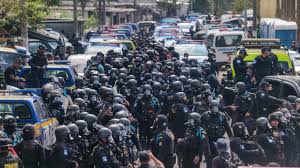
By Sunday, Guatemalan authorities had successfully retaken control of all three prisons, ending the standoff without casualties among the rescue teams. Police, supported by the army, conducted a swift operation at the Renovacion I maximum-security prison in Escuintla, approximately 75 kilometers south of the capital. The operation, which involved armored vehicles and tear gas, resulted in the freeing of nine hostages, including prison guards, who had been held captive by the gang members.
In total, police rescued 82 hostages across the three prisons, including 45 prison guards and one psychiatrist. Despite the intensity of the situation, authorities reported no further casualties during the rescue operations.
Terrorist Attacks and Gang Violence
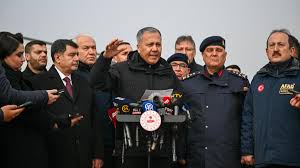
Interior Minister Marco Antonio Villeda described the killings of police officers as acts of terrorism, carried out in retaliation for the government’s actions against the gangs. “These attacks are a direct response from the criminal organizations as we intensify our operations against them,” Villeda stated. One suspected gang member was killed during the operations, but authorities did not report any other fatalities among the criminal groups.
The manhunt for the perpetrators continues as police ramp up efforts to dismantle the gangs’ infrastructure and arrest those responsible for the deaths of the officers.
State of Emergency Measures
President Arevalo’s declaration of a state of emergency gives authorities sweeping powers to address the growing threat posed by the gangs. The decree, which suspends the right to assembly and allows individuals to be arrested and interrogated without a court order, is aimed at restoring security across the country. However, it must be approved by the opposition-controlled Congress to remain in effect.
Opposition leader Luis Contreras called for unity in facing what he described as “one of the most painful and challenging moments” in Guatemala’s history. The US Embassy in Guatemala also issued a security alert, advising its personnel to shelter in place and avoid large gatherings.
Gang-Related Violence and Ongoing Operations
The violent actions by gangs like Barrio 18 and MS-13 have been a growing concern in Guatemala, where criminal violence remains pervasive. The two gangs are heavily involved in drug trafficking and violent crime, which has led to a surge in the country’s homicide rate. In 2025, Guatemala’s homicide rate was more than double the global average, standing at 16.1 per 100,000 inhabitants.
Since mid-2025, gang members have staged several uprisings in prisons, demanding more lenient conditions for their leaders. In October 2025, 20 leaders of Barrio 18 escaped from prison, with only six being recaptured, while one was shot and killed.
Looking Forward
As Guatemala grapples with these violent outbreaks, the government’s response to the growing gang problem remains crucial. The deployment of the army to the streets and the ongoing crackdown on organized crime signal a stronger stance against the gangs. However, the situation remains tense, and much will depend on the cooperation of the opposition and international partners as the country continues to confront its escalating security challenges.