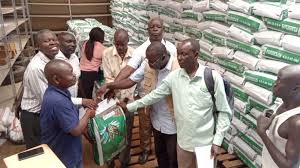
The Government of Uganda has distributed more than 1,450 bags of organic fertilizer to coffee farmers across seven districts in Northern Uganda to boost coffee production and improve soil fertility.
The fertilizers, branded Fertiplus, are made from a mix of animal and crop waste, making them environmentally friendly and suitable for sustainable farming.
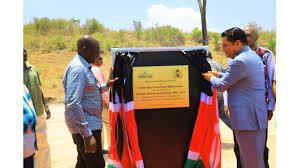
The fertilizers were officially handed over on Friday, November 1, 2025, to Gulu District Local Government for coordinated distribution.
According to the allocation plan:
• Gulu District received 284 bags
• Amuru – 200 bags
• Adjumani – 150 bags
• Omoro – 200 bags
• Nwoya – 300 bags
• Pader – 200 bags
• Kitgum – 40 bags
• Lamwo – 80 bags
The initiative is part of the government’s broader plan under the Ministry of Agriculture, Animal Industry, and Fisheries (MAAIF) and Operation Wealth Creation (OWC) to revive coffee farming in Northern Uganda and make the region a key player in the national coffee value chain.
Speaking during the handover, officials emphasized that coffee farming has become a major source of income in the north, helping farmers shift from subsistence to commercial agriculture.
Agricultural entrepreneur Sylvia Owori, who has been working with farmers in the region, said the support will greatly improve productivity.
“Northern Uganda has the potential to become a top coffee-producing region. Many farmers are now planting coffee alongside bananas and other perennial crops to improve their incomes,” Owori said.
She added that the rising global demand for Ugandan coffee gives farmers a unique opportunity to expand production and contribute more to the country’s Gross Domestic Product (GDP).
Local farmers in Gulu and neighboring districts welcomed the fertilizers, saying they had long struggled with poor soil fertility and limited access to farm inputs. They called on the government to ensure continuous supply and training in modern coffee-farming techniques.
District agricultural officers noted that Fertiplus fertilizer would help restore soil nutrients, reduce dependence on chemical fertilizers, and support Uganda’s vision to increase coffee exports from the current 8 million bags to 20 million bags annually by 2030.
The distribution marks another milestone in the government’s effort to promote sustainable agriculture, boost household incomes, and make Uganda a leading coffee exporter in Africa.