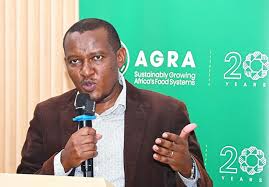
Ephantus Kimotho has called on African leaders to move beyond discussions and take decisive action in transforming the continent’s agriculture sector, warning that progress will remain stalled without strong implementation.
Speaking at a high-level regional retreat in Limuru, Kimotho emphasised that the success of the Comprehensive Africa Agriculture Development Programme depends not on policy frameworks alone, but on political will, coordination, and disciplined execution across governments.
The meeting brought together senior officials from 14 African countries, including Kenya, Nigeria, Uganda, and Tanzania, all seeking to align strategies for transforming agrifood systems across the continent.
Kimotho highlighted a growing shift among African nations toward building resilient domestic food systems—focusing on value addition, local consumption, and reduced dependence on imports.
However, he cautioned that fragmented approaches have slowed progress, urging leaders to treat agriculture as an interconnected system rather than a standalone sector.
Central to this transformation, he noted, is the commercialisation of agriculture. By supporting smallholder farmers to become agripreneurs, governments can unlock job creation and drive economic growth.
He pointed to mechanisation, digitalisation, and irrigation as critical tools for boosting productivity and strengthening climate resilience.
Financing also remains a key challenge. Kimotho stressed the importance of blended finance models and private sector partnerships to mobilise resources and scale up successful interventions.
Collaboration with organisations such as Alliance for a Green Revolution in Africa was highlighted as essential in accelerating change.
Turning to national priorities, he outlined Kenya’s ambitious irrigation plans, including expanding irrigated land to one million acres over the next decade. The initiative aims to significantly cut the country’s food import bill—currently estimated at Ksh 500 billion—while strengthening food security.
Additional investments in water infrastructure, including over 50 multipurpose dams, and programmes like the Farmer-Led Irrigation Development model are expected to further empower farmers with access to financing and technology.
Kimotho also underscored the need for inclusive growth, calling for greater involvement of women and youth through improved access to land, finance, markets, and innovation.
His message was clear: Africa’s agricultural transformation will not be achieved through dialogue alone. It will require bold leadership, coordinated action, and a commitment to scaling solutions that already work—turning long-standing promises into tangible progress.