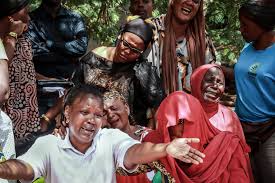
DAR ES SALAAM / DODOMA — Weeks after the violent unrest that followed Tanzania’s disputed October 29 general election, families across the country are still desperately searching for relatives who disappeared during the chaos, amid growing concerns about arbitrary arrests, abductions, and enforced disappearances.
The unrest erupted shortly after President Samia Suluhu Hassan was declared the winner in an election the opposition claimed was marred by irregularities. Protesters took to the streets in major cities including Dar es Salaam, Arusha, Mwanza, and Dodoma, demanding transparency and calling for a vote recount.
The demonstrations quickly turned deadly as security forces clashed with protesters, resulting in hundreds of casualties and mass detentions. Now, nearly two weeks later, many families say they still have no information on the whereabouts of their loved ones.
In Morogoro, 34-year-old Rehema Mhando says her younger brother, Amani, has been missing since October 30, a day after the protests intensified.
“He called me in the morning and said police were shooting. That was the last time we spoke,” Rehema told The Citizen, clutching a photo of her brother. “We’ve checked police stations, hospitals, even mortuaries — nothing.”
Similar accounts have emerged from Mwanza, Arusha, and Mbeya, where local rights groups report dozens of people missing, many believed to have been arrested or abducted during the nationwide security crackdown.
The Tanzania Human Rights Defenders Coalition (THRDC) said it had received over 200 reports of missing persons since the post-election violence began, though it warned the actual number could be much higher.
“We are verifying cases, but many families are afraid to speak out publicly for fear of reprisal,” said Onesmo Olengurumwa, the coalition’s national coordinator.
The Tanzania Police Force on Friday released a list of 10 individuals wanted in connection with what it termed “nationwide riots and acts of sabotage.”
Police spokesperson David Misime said authorities are conducting “a coordinated operation” to restore order, warning that “those involved in violence will face the full force of the law.”
However, human rights groups argue that the crackdown has gone beyond lawful enforcement, with reports of mass arrests, nighttime raids, and disappearances of opposition members and activists.
“Many people were taken away in unmarked vehicles. Some families have not been informed of any charges or locations,” said a lawyer representing detained protesters in Dodoma.
The United Nations Human Rights Office (OHCHR) and the African Commission on Human and Peoples’ Rights (ACHPR) have both called on Tanzanian authorities to ensure transparency and accountability in handling post-election detentions.
In a statement issued Thursday, the UN High Commissioner for Human Rights, Volker Türk, urged the government to “respect the rights of detainees, disclose information on those in custody, and ensure access to legal representation.”
Diplomatic sources told The Citizen that Western embassies in Dar es Salaam are closely monitoring the situation, with several countries privately urging the government to launch an independent inquiry into the alleged abuses.
The main opposition party, CHADEMA, led by Tundu Lissu, has accused the government of systematic intimidation of its supporters following the election results.
In a statement, CHADEMA’s secretary-general said the disappearances and arrests “represent a continuation of state repression” and called for the immediate release of detained members and accountability for the missing.
“This is not law enforcement — it is punishment for expressing political opinions,” the statement read.
Government officials have dismissed the claims as “political propaganda,” maintaining that all security operations are conducted within the law.
For many families, the silence has become unbearable. In Tanga, Mzee Rashid, a retired teacher, says his son Salim, 27, disappeared after leaving home to join a peaceful march.
“I just want to know if he’s alive,” he said softly. “Even if he’s in prison, let them tell us. The waiting is worse than death.”
Community leaders and clerics have begun urging the government to publish an official list of detainees to help families locate their missing relatives and reduce public tension.
As the government tightens security and investigations continue, Tanzania remains on edge.
The mass disappearances, alongside reports of treason charges against 240 individuals, including prominent activists, have deepened national unease.
While authorities insist calm is returning, rights groups warn that the social wounds left by the post-election unrest could take years to heal — unless justice and truth are swiftly pursued.