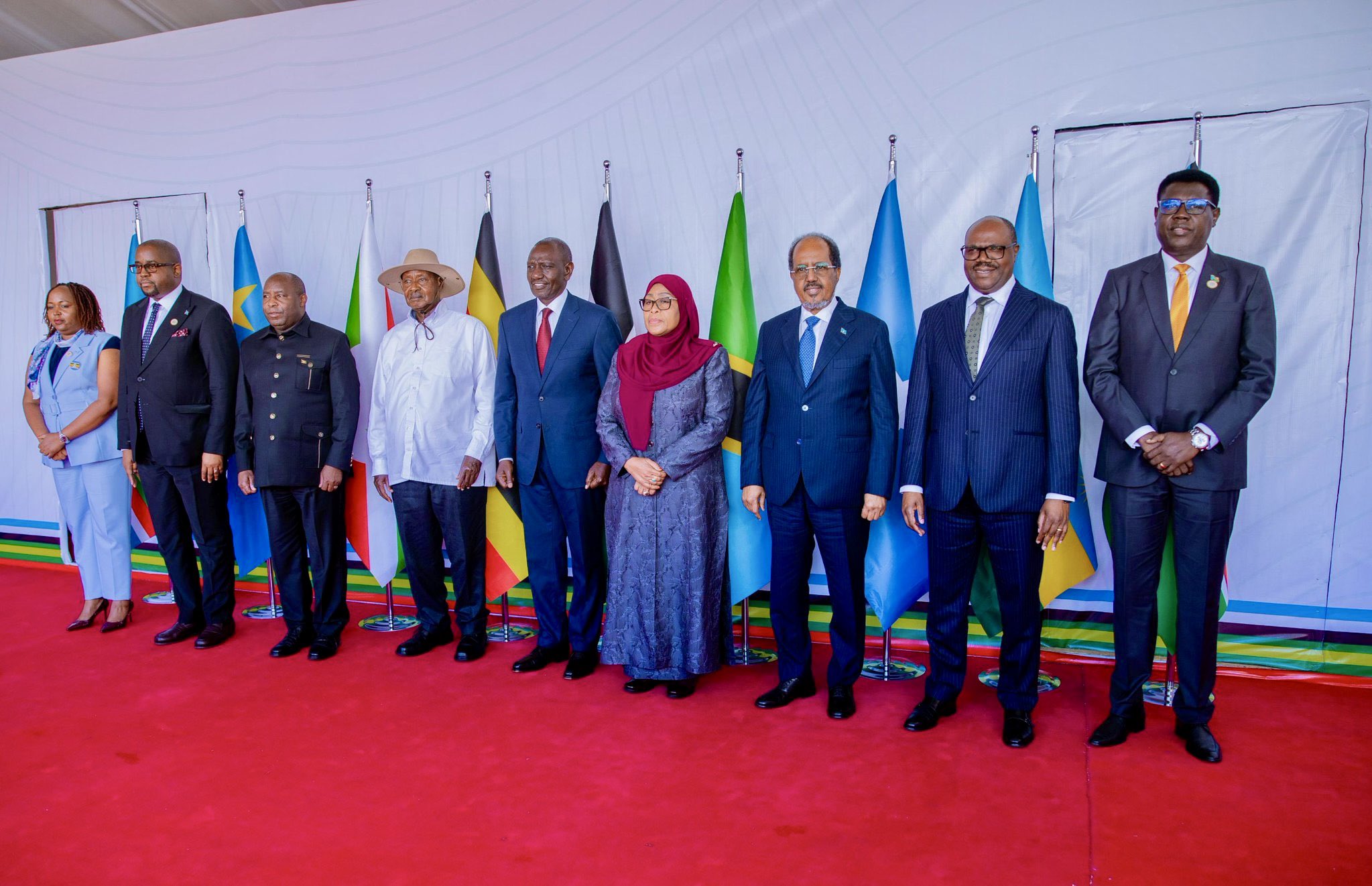
Leaders of the East African Community have agreed on a new financial contribution formula aimed at promoting fairness and strengthening cooperation within the regional bloc.
The decision was reached during the 25th Ordinary Summit of EAC Heads of State held in Arusha. The summit brought together leaders from member states to discuss economic integration, regional development, and cooperation among partner countries.
New Contribution System
Outgoing chairperson William Ruto, the President of Kenya, said the new framework considers the economic capacity of each member state.
Under the revised arrangement, all member countries will contribute 50 percent equally to the bloc’s annual budget, while the remaining portion will be determined based on each country’s economic strength and ability to pay.
Ruto explained that countries with larger economies or those benefiting more from regional trade would contribute more resources to support the community’s operations and development programmes.
Arrears Waived and Payment Grace Period
The summit also agreed to waive 50 percent of financial arrears owed by partner states and gave countries a two-year grace period to clear the remaining balances.
In addition, leaders decided that countries seeking to nominate candidates to the top five leadership positions within the community must have ratified the East African Treaty and cleared their financial obligations to the bloc.
Leadership Changes
During the meeting, Yoweri Museveni, President of Uganda, was elected the new Chairperson of the EAC Heads of State Summit, taking over from Ruto.
Leaders also appointed Steven Patrick Mbundi of Tanzania as the new Secretary-General of the regional body, replacing Veronica Nduva of Kenya.
Judicial Appointments
The summit further strengthened the regional judicial system by swearing in three new judges to the East African Court of Justice. They include Abdullahi Warsamme from Somalia, Anne Amadi from Kenya, and Digo Stephen Abraham from South Sudan.
Growth in Regional Trade
Ruto highlighted progress made during his 15-month tenure as EAC chairperson, noting increased trade among member countries.
He said intra-regional trade grew by about 22 percent, rising from $33 billion in 2024 to $40.3 billion in 2025. Regional exports also increased significantly, while imports grew at a slower rate, helping to reduce the bloc’s trade deficit.
Call for Stronger Regional Markets
In his acceptance speech, Museveni urged member states to strengthen trade within the region and across Africa.
He emphasized that a larger and reliable market would enable businesses to expand production, create jobs, and increase tax revenues.
The summit also launched the EAC Seventh Development Strategy (2026–2031) and introduced the East African Customs Bond, initiatives aimed at boosting regional economic integration and growth.
Leaders said these measures are expected to enhance cooperation, promote trade, and support economic development across East Africa.