The government of the Democratic Republic of the Congo (DRC) has said it accepts “the principle” of a ceasefire in the conflict-hit east, but the March 23 Movement has accused Kinshasa of trying to manipulate the peace process.
The announcement comes after Angola, which is leading mediation efforts, called on both sides to respect a ceasefire starting February 18, 2026. However, the Congolese government has not given a clear date for when the truce would officially begin.
Long-Running Conflict
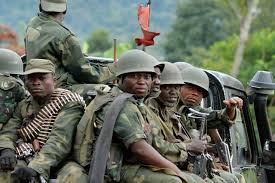
Eastern DR Congo has suffered violence for nearly 30 years, with dozens of armed groups fighting for control of land and valuable minerals. The region borders Rwanda and Burundi, and tensions have often spilled across borders.
The M23 group, which the UN and Western countries say is backed by Rwanda, resurfaced in 2021 and has since captured key towns.
In early 2025, M23 fighters seized Goma, the capital of North Kivu province, in a rapid offensive that left thousands dead and displaced many more. A month later, they took Bukavu, the capital of South Kivu province.
Since then, several ceasefires have been announced but later collapsed.
Government’s Ceasefire Proposal
In its latest statement, the Congolese presidency said President Félix Tshisekedi had agreed to the ceasefire proposal. The government outlined steps for implementation, including:
Immediate freezing of troop positions
No new military reinforcements
No resupply for offensive operations
An end to all foreign support for armed groups
Kinshasa also called for strict monitoring of the ceasefire.
M23 Response
The M23 rejected the announcement, accusing the government of “delaying tactics” and continuing military attacks while claiming to support peace.
Clashes were still reported on Friday in the hills of South Kivu near the town of Minembwe. Congolese forces, supported by local militias and Burundian troops, have reportedly been fighting an armed group allied to M23.
International Mediation Efforts
Peace efforts are being led by several international actors:
Angola is leading regional mediation.
The United Nations plans to strengthen monitoring through its peacekeeping mission, MONUSCO, which has about 7,000 troops in eastern Congo.
Qatar has mediated talks between the DRC government and M23.
The United States helped broker a separate agreement between the DRC and Rwanda in December 2025.
The African Union has appointed Togo’s President Faure Gnassingbe to guide the talks, working alongside Angolan President Joao Lourenco.
Despite these efforts, violence has continued on the ground.
What Is at Stake?
Eastern Congo is rich in minerals such as gold and coltan, which are used in electronic devices. Control over these resources has fueled the conflict.
Millions of civilians have been displaced over the years, and humanitarian groups warn that the situation remains fragile.
While the government’s acceptance of a ceasefire is seen as a positive step, past failed truces have left many Congolese skeptical. The coming days will be crucial in determining whether this latest effort can finally bring lasting peace to the troubled region.