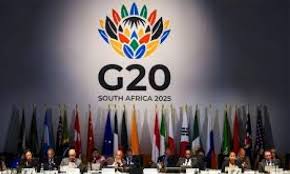
South Africa is set to host the first-ever G20 summit on African soil this weekend, with the pressing debt crisis facing many developing countries topping the agenda. The issue of debt is increasingly critical for nations trying to finance development, yet high debt-servicing costs are hindering their economic growth and future investments.
Developing countries are currently shouldering a staggering $31 trillion in global debt, a figure that has doubled since 2010, according to UNCTAD, the UN body responsible for integrating developing countries into the global economy. This rapid rise in borrowing, while essential to finance development, has led to what economist Kako Nubukpo calls a “snowball effect,” where deficits are accumulating and escalating into unsustainable debt.
Many African countries, which have young, growing populations requiring education, healthcare, and jobs, face urgent financing needs. However, the increasing fiscal deficits are translating into rising debt levels, straining their budgets. Nubukpo, a former Togolese minister, emphasizes that these nations are now spending more on servicing debt than on critical sectors like education and healthcare.
In sub-Saharan Africa, public debt stands at 58.5 percent of GDP this year, a level significantly lower than that of many advanced economies, including France (117 percent), Japan (230 percent), and the United States (125 percent). Despite this, African governments spent an average of $70 per person on interest payments between 2021 and 2023, exceeding spending on education ($63) and health ($44), according to UNCTAD.
The paradox of high debt-servicing costs and low tax revenues highlights the structural weaknesses in many African economies. According to OECD data, the average tax revenue in Africa was only 16 percent of GDP in 2022, compared to 32 percent in advanced economies. Corruption, poor governance, and a reliance on imports instead of local production exacerbate these issues, leaving many countries with persistent trade and fiscal deficits.
To address these challenges, Osita Chidoka, head of Nigeria’s Athena Centre for Policy and Leadership, stresses the need for stronger domestic tax systems coupled with a fairer international financial architecture. “Africa must grow out of debt, supported by a fairer global financial system,” he argues, adding that no country can “tax or cut its way out of this crisis alone.”
A significant issue affecting Africa’s ability to secure favorable financing is the biased approach of major credit rating agencies. A 2023 UNDP report estimated that African countries lose $74.5 billion annually due to these biases, a sum equivalent to Africa’s annual infrastructure needs. This issue has sparked criticism from figures like David McNair, global policy director at One Campaign, who argues that the political and currency risks associated with African countries are overstated, often due to systemic biases in the global financial system.
In response, the African Union plans to launch its own rating agency next year, aimed at improving data and transparency, though McNair cautions that it will not be a “miracle cure.”
The growing complexity of global debt restructuring is another key issue on the table. Between 2010 and 2023, the share of private lenders in low-income country debt surged from 6 percent to 19 percent, according to the IMF. This shift has made restructuring slower and more difficult, with private creditors and governments pointing fingers at each other over the allocation of resources.
One key point of contention is how much of the relief should go to Beijing, which is a major creditor to many African countries, and how much should go toward repaying private bondholders, who are often seen as representing Western institutions. As McNair points out, this “blame game” has led to a broken system that hampers effective debt relief measures.
To address these issues, experts like Chidoka are calling for a faster and more solid framework for African debt resolution. The Institute of International Affairs in South Africa proposes that laws be introduced to compel private creditors to engage in debt restructuring talks.
Recent G20 presidencies, including those of Indonesia, India, and Brazil, have already advocated for increasing the lending capacity of multilateral development banks such as the World Bank and the African Development Bank, allowing them to provide financing under more favorable terms for African nations.
As the G20 summit unfolds in South Africa, the international community faces a critical opportunity to reform the global financial system and address the deepening debt crisis that threatens to undermine Africa’s development prospects.