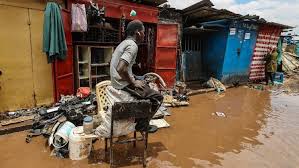
Heavy rains have caused widespread destruction across Kenya, leaving at least 45 people dead and tens of thousands displaced, with the capital city, Nairobi, hardest hit.
According to police and government reports, torrential downpours transformed streets into fast-flowing rivers, sweeping away vehicles, flooding homes, and damaging critical infrastructure. In Nairobi alone, 23 fatalities were recorded on Saturday, contributing significantly to the national death toll. Authorities estimate that over 50,000 people have been left homeless.
Widespread Destruction
Residents report extensive property damage. Fredrick Wasonga, a street vendor, said, “The banks of the Nairobi River collapsed as the rains continued. Cars were swept away, and water entered shops, destroying properties.” Derrick Juma, a local shop owner, noted that two neighbors died during the floods, including one who was electrocuted.
Critical infrastructure, farmland, and roads have been severely affected. Air travel was disrupted, with Kenya Airways suspending flights to Nairobi and diverting others to Mombasa. Transportation authorities are working to restore routes while humanitarian organizations provide emergency relief to displaced families.
Urban Planning and Climate Concerns
Experts attribute the severity of the floods to a combination of climate change, rapid urbanization, and poor drainage infrastructure. Studies indicate that East Africa has experienced increasing extreme weather events, including both severe droughts and intense rainfall, over the past two decades. Critics say uncontrolled development and inadequate drainage systems in Nairobi have exacerbated the disaster.
Relief and Rescue Efforts
Rescue teams continue to search for missing persons and provide aid to those affected. Authorities remain vigilant as further rainfall could trigger additional flooding and landslides in several counties.
Humanitarian agencies, local authorities, and communities are coordinating to support recovery efforts, rebuild homes, and assist displaced residents in returning to safety.
The focus remains on emergency response and long-term measures to mitigate future flood risks in Kenya’s rapidly urbanizing regions.