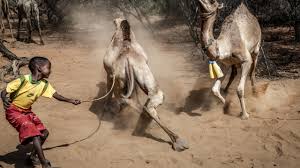
In northern Kenya, where the sun burns hot and rain has been missing since April, camels have become the new lifeline for pastoral communities.
Once known for keeping large herds of cattle, the Samburu people are now turning to camels as the country battles one of the worst droughts in 40 years.
Sitting beside a dry riverbed near Sereolipi, herder Chapan Lolpusike recalls how drought wiped out his cows and oxen. “All my cattle died,” he says. “We now only raise camels.”
For generations, cattle were a sign of wealth and identity among the Samburu. But changing weather patterns have made cattle rearing almost impossible. The 2021–2022 droughts killed nearly 70 percent of livestock in arid and semi-arid areas, leaving families hungry and dependent on aid.
To help communities recover, Samburu County officials launched a camel distribution program in 2015. With support from the Ministry of Agriculture and non-governmental partners, the county has so far distributed about 5,000 Somali camels, a breed known for endurance and high milk production. Over 1,000 camels were handed out in the past year alone.
“Camels can survive longer without water, feed on dry grasses, and produce milk even when there’s no rain,” says James Lolpusike, a local village administrator. “They have truly saved our people.”
In many villages, each family now owns at least one camel. The benefits are clear: more stable milk supply, healthier children, and fewer conflicts over grazing lands.
“Cows only give milk when the grass is green,” explains Naimalu Lentaka, a mother of four. “Camels give milk all year round — that’s the difference.” Camel milk, rich in nutrients and antibodies, is now a staple food in the region.
A 2022 study by Meru University found that camel milk provides up to half of the total nutrition intake for families during droughts.
Beyond survival, camels are also bringing people together. Each year, the Maralal International Camel Derby draws herders and tourists from across the region. This year’s event — themed “Peaceful Cultural Interactions” — featured 40 camels racing over 21 kilometers.
Organizers say the race promotes peace among communities that once fought over scarce water and pasture.
Still, challenges remain. Camel diseases, limited veterinary services, and the persistent threat of climate change continue to test the resilience of pastoralists. And despite their adaptability, camels too need water — something becoming increasingly scarce.
“We pray every day for rain,” says James. “Camels are strong, but even they can’t survive forever without water.”
As Kenya faces a drier future, experts say the Samburu’s shift from cattle to camels offers a glimpse into how traditional communities can adapt to a changing climate — turning hardship into resilience and innovation.