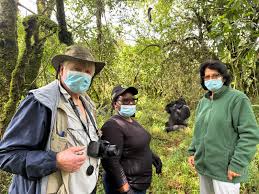
Stanley Johnson, a British author, environmentalist, and father of former UK Prime Minister Boris Johnson, has praised Uganda for its strong economic progress and impressive wildlife conservation efforts following a recent visit to the country.
Speaking during his return trip to Uganda after several years, Johnson described the country as “a wonderful place for both people and wildlife.” He said Uganda is showing clear signs of energy, growth, and renewed confidence, adding that there is a strong sense of momentum in its economy.
Johnson is taking part in an Explore Uganda tour, which includes visits to major wildlife parks, cultural sites, and industrial areas. In Kampala, he toured landmarks such as Lubaga Cathedral, the Muteesa I Catholic Memorial Museum, and the Gaddafi National Mosque, where he admired the city’s expanding skyline.
He is also scheduled to visit key conservation areas including Queen Elizabeth National Park, Kibale Forest, and Mgahinga Gorilla National Park, as well as industrial projects in Kapeeka and tourist sites in Jinja. Johnson said he is especially interested in Uganda’s primates, noting that repeated encounters with chimpanzees and mountain gorillas continue to be both scientifically important and personally inspiring.
The Uganda Tourism Board (UTB), working with partners such as the Uganda High Commission in the UK, Uganda Airlines, Volcanoes Safaris, and private sector players, supported the visit as part of efforts to promote Uganda as a leading eco-tourism destination.
Johnson’s visit also coincided with Uganda’s NRM Liberation Day celebrations, which he attended after receiving an invitation from President Yoweri Museveni. He described the invitation as a great honour.
Uganda’s High Commissioner to the UK, H.E. Nimisha Madhvani, who accompanied Johnson during part of the tour, highlighted Uganda’s growing international recognition for conservation—especially gorilla protection. She noted that Uganda is home to more than half of the world’s remaining mountain gorillas, mainly found in Bwindi Impenetrable and Mgahinga Gorilla National Parks.
Recent global estimates place the mountain gorilla population at about 1,063 individuals, a significant recovery credited to strong conservation policies, community involvement, anti-poaching efforts, and carefully managed tourism.
Johnson said Uganda’s ability to balance economic development with environmental protection is encouraging and worth global attention. Uganda Tourism Board officials added that such high-profile endorsements help attract international visitors while reinforcing the country’s image as a safe, sustainable, and responsible tourism destination.