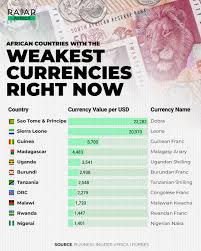
Several African countries are experiencing significant currency weakening in February 2026, creating real economic challenges for citizens, businesses, and governments.
Why Weak Currencies Matter
Higher import costs: Countries that rely on imported goods, from food and medicine to fuel and machinery, face rising prices as their local currency loses value.
Inflation and reduced purchasing power: Consumers see their money buy less, particularly in urban areas where imported products make up a large portion of spending.
Debt pressures: Many African nations have loans in foreign currencies. As local currencies weaken, repayments become more expensive, straining national budgets.
Reduced public spending: Governments may need to cut development projects or raise taxes, slowing economic growth and public investment.
Investment challenges: Weak currencies signal economic instability, deterring both local and foreign investors and reducing capital inflows.
Social and Economic Consequences
Lower-income households are hit hardest, increasing inequality over time.
Workers’ real incomes decline as earnings lag behind rising prices.
National economies face slower growth due to reduced investment and spending.
The Path to Currency Strengthening
Experts emphasize that reversing currency weakness requires a mix of:
Sound monetary policy
Fiscal discipline
Fundamental economic reforms
Without these, currency depreciation can become self-reinforcing, creating a cycle of inflation, debt, and economic instability.
Conclusion
Currency weakness is more than a financial statistic—it directly impacts daily life, investment confidence, and long-term growth. African nations must implement comprehensive reforms to stabilize their currencies and safeguard both citizens and economies.