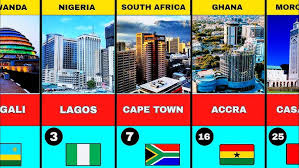
Africa’s development continues to progress, though unevenly across its 54 countries. While no African nation is classified as “fully developed” by global standards, several countries have made remarkable advancements in education, healthcare, income, and infrastructure.
A new 2025 analysis by the United Nations Development Programme (UNDP) and World Population Review has ranked the Top 10 Most Developed African Countries, offering a clear look at where progress is strongest.
Island Nations Lead the Continent
At the top of the development rankings are Seychelles and Mauritius, two small island nations known for stability, strong institutions, and well-managed economies.
Seychelles
HDI: 0.848
GNI per capita: $12,850
The country benefits from a small population and consistent investments in health, education, and tourism.
Mauritius
HDI: 0.806
GNI per capita: $17,460
Its strong financial sector, stable governance, and expanding digital economy continue to boost development.
These nations show how effective policies and targeted investment can dramatically improve quality of life.
Continental Leaders: South Africa, Libya, Egypt & Gabon
Several larger countries on the mainland have also stood out in 2025:
🇿🇦 South Africa
HDI: 0.741
GNI per capita: $6,100
Despite economic stagnation and high inequality, South Africa remains Africa’s most industrialized nation with advanced infrastructure and a strong financial sector.
🇱🇾 Libya
HDI: 0.721
GNI per capita: $6,310
After years of conflict, Libya is rebuilding institutions and recovering economically. Its improvement shows signs of renewed stability and investment.
🇪🇬 Egypt
HDI: 0.754
GNI per capita: $3,510
With a large population of over 110 million, Egypt continues to make progress through major investments in roads, health services, education reforms, and energy projects.
🇬🇦 Gabon
HDI: 0.733
High oil revenues, rapid urbanization (80% urban population), and strategic social investments have pushed Gabon into upper-middle-income status.
What the Rankings Mean
The 2025 development list highlights countries that have managed to translate good governance, policy consistency, and targeted investments into real improvements in citizens’ lives.
Even though challenges such as inequality, unemployment, and infrastructure gaps remain across the continent, these countries demonstrate that progress is possible with long-term planning and stable institutions.
Final Summary
The top 10 most developed African countries in 2025 show strong advances in:
Life expectancy
Education
Income levels
Health systems
Government stability
Access to electricity and modern services
From the small island nations of the Indian Ocean to the industrial hubs of mainland Africa, these countries continue to set the pace for the continent’s development journey.