African countries have been urged to move beyond promises and ensure that their biodiversity restoration commitments produce real and measurable results. Environmental experts and regional leaders say strong monitoring, clear reporting, and the use of reliable data are essential if restoration efforts across the continent are to succeed.
The call was made during a high-level subregional workshop focused on improving how countries monitor and report biodiversity restoration under the Global Biodiversity Framework. The meeting brought together policymakers and technical experts from Eastern and Southern Africa.
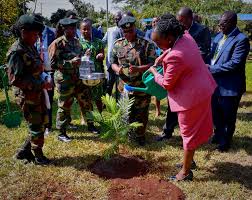
Speaking at the event, Kenya’s Cabinet Secretary for Environment, Climate Change, and Forestry, Dr Deborah Barasa, stressed that restoring ecosystems is key to addressing biodiversity loss, fighting climate change, and supporting sustainable development. However, she noted that restoration efforts mean little if progress cannot be measured and verified.
Dr Barasa explained that healthy ecosystems support livelihoods, protect water sources, boost food production, and help communities adapt to climate change. She emphasized that countries must track what works, learn from failures, and ensure that restoration plans lead to visible results on the ground rather than remaining as policy statements.
Her remarks were supported by Patrick Mucheleka, Chairperson of the Governing Council of the Regional Centre for Mapping of Resources for Development (RCMRD) and Zambia’s Permanent Secretary for Lands and Natural Resources. He noted that although African countries have different environments and economic conditions, many face similar challenges such as land degradation, limited data, and low technical capacity.
Mucheleka said regional cooperation is critical if Africa is to meet its global biodiversity commitments, adding that countries share a responsibility to protect ecosystems that millions of people depend on for survival.
In a video message to the workshop, Astrid Schomaker, Executive Secretary of the Convention on Biological Diversity, highlighted the importance of partnerships in addressing global environmental crises. She said biodiversity loss, climate change, land degradation, and pollution are closely linked and require coordinated action from governments, communities, and institutions.
The workshop focused on implementing Target 2 of the Kunming-Montreal Global Biodiversity Framework, which aims to restore at least 30 percent of degraded land, freshwater, and marine ecosystems by the year 2030.
Participants came from 11 countries: Comoros, Eswatini, Ethiopia, Kenya, Madagascar, Rwanda, Somalia, South Sudan, Uganda, Tanzania, and Zambia.
The meeting also marked the launch of RCMRD as a Subregional Technical and Scientific Cooperation Support Centre. In this role, RCMRD will support countries by providing data, technical tools, and scientific coordination to help them meet their biodiversity restoration targets.
RCMRD Director General Dr Emmanuel Nkurunziza said the institution is ready to help countries turn their commitments into action by offering practical support and reliable data systems.
The workshop also included representatives from other African regional biodiversity centres, as well as women, youth, and indigenous groups, highlighting the need for inclusive approaches to environmental restoration across the continent.