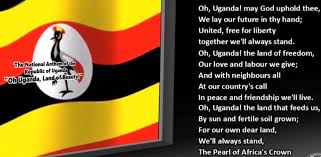
Every serious nation is ultimately defined not only by its physical achievements, but by the moral language it offers its people as a shared inheritance. In this sense, national anthems are not ceremonial songs; they are distilled philosophies of nationhood. Uganda’s national anthem stands as one of the most elegant examples of this tradition—simple in form, profound in meaning, and timeless in its vision.
Composed at the dawn of independence, Uganda’s anthem was written by George Wilberforce Kakoma and set to music by Peter Wingaard, and formally adopted in 1962. Its beauty lies in its restraint. With few words, it expresses a complete national philosophy—one grounded in faith, unity, responsibility, and collective purpose. Rather than glorifying power or conquest, the anthem speaks softly but firmly about values that endure beyond generations.
When Ugandans sing, “Oh Uganda, may God uphold thee; we lay our future in thy hands; united for liberty; together we always stand,” they affirm a shared identity and a common destiny. These lines form a collective pledge, reminding citizens of what binds them together and what they aspire to uphold. The anthem is not merely remembered; it is renewed each time it is sung.
The opening line, “Oh Uganda, may God uphold thee,” reflects humility and wisdom at the birth of the nation. It acknowledges that the strength of a country is anchored in moral grounding and higher purpose. By placing faith at the center of national life, the anthem affirms values of conscience, accountability, and hope—principles that inspire confidence and continuity.
This spiritual foundation resonates naturally with Uganda’s constitutional ethos, which recognizes sovereignty as belonging to the people and governance as a trust exercised with responsibility. The anthem and the Constitution speak the same language: leadership guided by principle, authority balanced by duty, and national life rooted in shared moral understanding.
The line “We lay our future in thy hands” expresses deep care for generations yet to come. It reflects a forward-looking spirit—one that values stewardship, continuity, and collective responsibility. The anthem reminds Ugandans that the nation is a living inheritance, shaped by today’s choices and preserved for tomorrow’s citizens.
In the phrase “united for liberty,” the anthem captures a powerful harmony between togetherness and freedom. Unity is presented not as uniformity, but as shared commitment to dignity and self-determination. Liberty, in this vision, is something safeguarded collectively, strengthened by mutual respect and common purpose.
The closing line, “together we always stand,” is the anthem’s crowning affirmation. It celebrates solidarity across regions, cultures, and generations, expressing confidence in Uganda’s ability to face challenges as one people. It is a declaration of resilience, cooperation, and national pride.
The enduring beauty of Uganda’s national anthem lies in its constancy. Governments may change and history may unfold, but the anthem remains steady—sung in schools, at national ceremonies, and in moments of joy and reflection. It continues to offer a unifying vision of Uganda: humble yet confident, diverse yet united, rooted in faith and committed to freedom.
In its simplicity and grace, the anthem stands as a gentle reminder of who Ugandans are and what they share. It affirms that love of country can be thoughtful and hopeful, and that a nation’s truest strength is found not only in what it builds, but in the values it sings together.