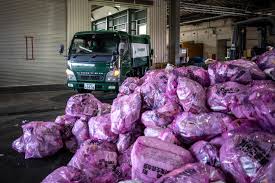
A groundbreaking recycling initiative in Japan is transforming one of the world’s most problematic waste products—used diapers—into reusable materials, offering new hope for reducing landfill pressure and addressing the needs of an ageing population.
Every year, billions of used diapers are either buried or burned across Japan, with adult diapers now surpassing those used for babies. In response, hygiene product manufacturer Unicharm has launched a pilot project that recycles the core materials of disposable nappies to create new products, including even new diapers.
The initiative is currently being tested in the towns of Shibushi and Osaki, communities known for their strong recycling culture. Together, they recycle about 80 percent of household waste—far above the national average—and have managed to significantly extend the lifespan of their landfill facilities.
The process involves collecting used diapers, shredding and washing them, and then separating them into key components such as pulp, plastic, and super-absorbent polymers. Through advanced treatment, including ozone sterilisation, deodorisation, and bleaching, these materials are made safe for reuse.
Initially, the recycled materials were used for lower-grade products like toilet paper. However, the major breakthrough has been the successful reuse of pulp—the primary component of diapers—to manufacture new ones. The company aims to expand the process further by 2028 to fully recycle all components into new diaper products.
Currently, recycled diapers are available in limited local markets, priced slightly higher than conventional ones, or supplied to selected childcare and elderly care facilities. Efforts are also underway to reduce water usage in the recycling process and expand the program to more municipalities by 2035.
This innovation comes at a crucial time for Japan, where demographic shifts are driving increased demand for adult diapers. The country is home to a rapidly ageing population, with nearly 100,000 people aged over 100. In 2024 alone, Japan produced 9.6 billion adult diapers compared to 8 billion for babies.
Environmental concerns are also mounting. By 2030, it is estimated that Japan will dispose of 2.6 million tons of used diapers annually, making up over 7 percent of total municipal waste by weight.
Although Japan’s overall recycling rate remains below 20 percent—lower than countries like Germany and the United Kingdom—the nation has been exploring innovative waste management solutions, including energy generation through waste incineration.
The government now aims to have at least 100 municipalities adopt or consider diaper recycling initiatives by 2030.
If widely adopted, this breakthrough could not only reduce environmental strain but also reshape how disposable hygiene products are perceived—turning what was once considered waste into a valuable resource.
Get smarter responses, upload files and images, and more.